The Goods and Services Tax (GST) Council meeting on compensation for the states remained inconclusive on Monday, with 20-21 states opting for the Reserve Bank of India (RBI) window of Rs 1.10 trillion (earlier it was Rs 97,000 crore) and around 10 states insisting the Centre borrow and disburse the money.
The next meeting is now scheduled for October 12.
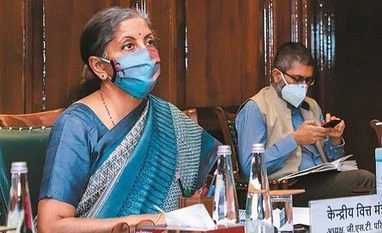
“The question was 20-21 states deciding to opt for the first option (the RBI window) and others wanting the Centre to borrow. Lots of discussion happened on that ... Bihar Deputy Chief Minister Sushil Modi suggested that 3-4-5 days be given to the states to discuss the issue. I gave eight days and the next meeting will happen on October 12,” Union Finance Minister Nirmala Sitharaman said after the meeting.
She said no state, irrespective of its choice, would be denied compensation.
In her answer to a question, she said she was not violating any provision of the compensation law. As to why she mentioned the number of states opting for one of the offers given by the Centre, she said, “20-21 states opted for it (RBI window) and we have put it on record. I can’t be told you should not mention it because it gives the feeling that the majority is deciding the issue. Even that will be unfair to the states which have opted.”
It is not that the Centre is sitting on the money and not giving it to the states, but the money has to be borrowed, she said.
Meanwhile, Kerala Finance Minister Thomas Isaac tweeted: “10 states demand(ed) that full compensation should be paid to the states during the current year as per clauses in the law and centre should borrow. Decision was postponed to the next meeting on 12th of October.”
Meanwhile, the Centre will distribute Rs 20,000 crore collected through compensation cess so far this year to the states tonight, Sitharaman said.
Sitharaman said borrowing for GST compensation would have no bearing on the money that states raise, keeping themselves with the bounds of 5 per cent of state gross domestic product. Also it will not be reckoned as debt from the point of view of the Finance Commission’s recommendations.
The council decided to extend paying the states compensation cess beyond June 2022 but the period of the extension is yet to be decided.
Sitharaman said the cess to be collected after June 2022 would be first used for paying interest on borrowing. The remaining part will be divided into two, with half of it for paying back the principal of Rs 1.10 trillion, which is the compensation gap arising out of the GST system, and the other half for paying the shortfall owing to Covid-related issues.
She said no state would pay from its own pocket.
The Centre had given two options to the states for compensating them for the shortfall in compensation cess – Rs 97,000 crore (now Rs 1.1 trillion) to be facilitated by the RBI and Rs 2.35 trillion of market borrowing.
The council decided to give Rs 25,000 crore of integrated GST to the states that received less than what they required in previous years. IGST of Rs 1.60 trillion was unallocated. Of that Rs 80,000 crore was distributed to states. But since there was no formula of allocating the fund, some states got more than their share and others received less. Those who got more will not have to return the money immediately.
The council also decided to give relief to companies whose turnover is less than Rs 5 crore. They will have to file quarterly returns from January against monthly returns now. Also, refunds will be given to only those whose bank accounts are validated by Aadhaar and the permanent account number.
The council also decided to exempt from GST the Indian Space Research Organisation for launching satellites.

 "No breakthrough in GST compensation deadlock; next Council meet on Oct 12")












 Connect with us on WhatsApp