Hard to measure job growth in country as data is scarce: Ramesh Abhishek

DIPP Secretary says govt figures take into account only 1.74% of all enterprises in the country
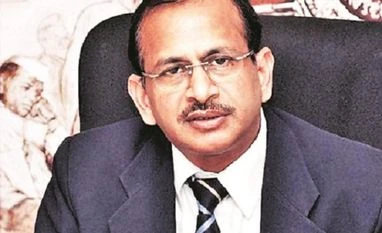
Ramesh Abhishek
Ramesh Abhishek
Subhayan Chakraborty New Delhi
Last Updated : Oct 07 2017 | 2:13 AM IST
There’s too little data on jobs, which makes it difficult to check for growth in these, says Ramesh Abhishek, Secretary of the Department of Industrial Policy and Promotion (DIPP).

That is so for both the government and the private sector, he said at the 33rd India Economic Summit, being jointly organised by the World Economic Forum and the Confederation of Indian Industry.

“Only 1.74 per cent of all enterprises are taken into consideration by the Labour Bureau which measures growth,” he said at a panel discussion, titled Re-engineering Bureaucracy.

He added that close to four in every person employed in the manufacturing sector continue to be in the informal part of the business. Logistics and retailing sectors contribute a significant number of jobs but aren’t counted either.

Abhishek was making an argument that jobs and job growth were being underestimated but, observed a senior economist, the same argument can be used to say growth is lower than what the government estimates. For, sectors in the informal economy, labour-intensive and cash-dependent, have been disproportionately hit after demonetisation and then the goods and services tax (GST).

Amitabh Kant, chief executive of the NITI Aayog, pointed to the potential for job creation from start-up entities.

“Home-grown start-ups have employed thousands. While Ola has created  700,000 entrepreneurs, Uber has given jobs to 450,000 people who all own their car,” he said.

On infrastructure development, road transport and highways secretary Yudhvir Singh Malik said 2017 would see addition of close to 10,000 km of highways. 

“India has 5.2 million km of roads, across categories. Three years back, only 91,000 or 2.1 per cent were national highways. That has increased to 115,000 km,” he said. Despite a miniscule share of roads being categorised as national highways, almost 40 per cent of interstate traffic courses through these, he said. The government plans 250,000 km of these highways.

Capacity addition is expected in the railways as well, Railway Board chairman Ashwani Lohani said. “The average speed of passenger trains is 40-50 km an hour, while that of freight trains is 23 km an hour. This has to change,” he added.

As in other sectors, infrastructure in the railways would be updated through new technology and data. On this note, Aruna Sundararajan, information technology secretary, said big data should be leveraged. “We haven’t even begun to scratch the surface of data — the new oil of the 21st century,” she said.

One subscription. Two world-class reads.

Already subscribed? Log in

Subscribe to read the full story →
*Subscribe to Business Standard digital and get complimentary access to The New York Times

Smart Quarterly

₹900

3 Months

₹300/Month

SAVE 25%

Smart Essential

₹2,700

1 Year

₹225/Month

SAVE 46%
*Complimentary New York Times access for the 2nd year will be given after 12 months

Super Saver

₹3,900

2 Years

₹162/Month

Subscribe

Renews automatically, cancel anytime

Here’s what’s included in our digital subscription plans

Exclusive premium stories online

  • Over 30 premium stories daily, handpicked by our editors

Complimentary Access to The New York Times

  • News, Games, Cooking, Audio, Wirecutter & The Athletic

Business Standard Epaper

  • Digital replica of our daily newspaper — with options to read, save, and share

Curated Newsletters

  • Insights on markets, finance, politics, tech, and more delivered to your inbox

Market Analysis & Investment Insights

  • In-depth market analysis & insights with access to The Smart Investor

Archives

  • Repository of articles and publications dating back to 1997

Ad-free Reading

  • Uninterrupted reading experience with no advertisements

Seamless Access Across All Devices

  • Access Business Standard across devices — mobile, tablet, or PC, via web or app

Next Story


