Several consignments of grapes exported from India to the European Union (EU) in April 2015 were suddenly stopped mid-way owing to fears that they contained traces of chlormequat chloride — an innocuous chemical used to control plant growth.
Farmers in India widely use the chemical to stimulate growth in fruit plants.
Heath inspection by the EU found that higher than permissible residues of the chemical were found in a batch of Indian grapes.
The EU’s residue limit (mrl) for the chemical, commonly called “lihocin”, was 0.05 mg/kg (or 0.05 ppm).
Reports said one reason for this misstep was that the Indian authorities didn’t put this chemical on the list of substances that should not be used in grapes for export. Consequently, grape consignments were rejected all in one go, causing a loss of more than Rs 300 crore to farmers and exporters.
Grapes have the second-highest share in India’s fruit export basket and growers are again complaining about phytosanitary barriers.
Russian regulations have suggested classifying the produce based on sweetness, something India doesn't have the capacity to do right now, an association of cultivators in Nashik has told the government.
Grapes from India usually arrive in European supermarkets between March 15 and May 15 and are randomly tested for banned pesticides and chemicals. Not only grapes, but a host of agriculture products from India be it mangoes, rice or even pomegranate have faced non-tariff barriers from the EU, the US, and even China, exporters point out. In 2017, India’s pomegranate exports to the EU were also stopped mid-way after the residue monitoring plan for the crop was changed abruptly into the season.
Elsewhere cashew exports from Kerala and large parts of South India have struggled in their largest market - the United Arab Emirates - after imports were stopped following a deadly Nipah virus outbreak in 2018. Cashew exports, integral to the local economy, have fallen from more than $1 billion in 2017-18 to $655 million, as a result.
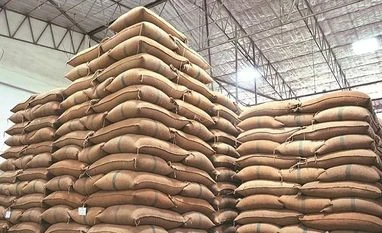
It’s a similar story with rice exporters who remain on edge, fearing new regulations by Chinese authorities. China is one of the world’s largest importers of rice, while India is big exporter. In fact, the staple grain for a majority of Indians remains by far the single largest exported farm commodity, making up $7.7 billion worth of outbound shipments in 2018-19.
China had cut off non-basmati rice imports from India few years back after some samples were found containing ‘khapra’ (cabinet) beetle. But both industry sources and government continue to vehemently deny this charge.
Rice bound for China has also been called out for not adhering to other requirements of China's strict food safety and quality norms, many of which keep on being updated. Beijing has for long mandated that Indian shipments strictly comply with Chinese plant quarantine laws and regulations. In a publicised tour, a delegation of experts from China scrutinised rice mills across the country last year. Finally, 14 out of the 19 registered rice exporters were permitted to ship limited amounts of non-basmati rice to China.
But the remaining five — mostly sellers of high value Basmati rice — were asked to apply fresh after improving storage and isolation facilities, leading to losses.
“The problem is India is a tropical country with very small landholder farmers and our use of chemicals and pesticides in plants is bound to be more than the standard prescribed by some European nations. Secondly, many times it has been found that consignments have been stopped mid-way alleging residue levels more than the norms without any scientific basis and just arbitrarily,” Gokul Patnaik, chairman Global Agrisystems Pvt Ltd and former head of Agriculture and Processed Food Products Export Development Authority (APEDA) told Business Standard.
“The perception in some countries, is that whatever factors they aren’t aware of, is not good for public or crop health. This is obviously not correct,” Patnaik said. If not for the non-tariff barriers, Indian agriculture exports could easily rise by another 15-20 per cent from the current levels, Patnaik believes.
Over the past few years, trade policymakers have placed their bets on agri exports, creating a dedicated trade policy and securing market access in various nations. But India’s agricultural exports stood at $ 38.73 billion in 2018-19, growing by just 0.8 per cent annually. The rate of growth nosedived from 15 percent in 2017-18. Commerce Department officials hold imposition of non-tariff barriers as a prime reason for the volatility in export numbers. Case in point, total agri exports stood at $39.33 billion six years ago.
But, senior officials say they are hopeful of a fast pickup in the export growth rate as the cost of logistics falls and investments in back-end infrastructure such as cold chains. To tide over the issue of non-tariff barriers, the government is planning special agri export clusters, which will host pesticide free zones for produce headed to foreign shores, sources say.

 "How India's high-value farm exports are suffering under new restrictions")











