In the slugfest between the country’s three primary aluminium makers – Vedanta, Hindalco and the National Aluminium Company – and the large number of small and medium secondary metal producers over what ideally should be the import duty on scrap, the government is unwittingly caught in the middle.
By now, it has become a ritual ahead of the presentation of the Union Budget for the two contestant groups to demand steep duty hike or further easing of scrap imports depending on where each stands in the two-tier industry where the government as the arbiter has not yet been able to find any common ground.
New Delhi has, therefore, thought it wise to leave the customs duty on aluminium scrap at a low 2.5 per cent. It, however, tinkered with import levy on primary aluminium and aluminium products the way big boys of the industry— that is, the integrated producers— wanted.
Aluminium recyclers are happy that scrap is spared any extra customs duty burden. In the prevailing environment favouring unrestrained imports of scrap from multiple sources, the integrated producers, who among them have built smelting capacity of 4.1 million tonnes (mt) and most of that in bauxite and non-coking coal rich Odisha, take exception on three counts.
First, according to them, it is “logic defying” that of all non-ferrous metals, including copper, zinc, lead and nickel, it is only aluminium for which there is import duty variance.
Second, as a primary producer group official says: “The global trading environment in aluminium scrap, triggered by China rapidly scaling down imports before it finally puts a ban is changing radically. Angered by Donald Trump’s trade actions, Beijing has put a whopping duty of 25 per cent on scrap imports from the US. This has led edgy American traders to push as much scrap as possible into India, taking advantage of our low duty and big appetite for the material.”
Post Chinese punitive duty, the US stepped up scrap exports to India by 149 per cent to 259,000 tonnes in 2018-19. Again during April to October 2019, our scrap imports from the US further advanced 50 per cent to 190,000 tonnes.
Third, in the absence of official standards and proper checks at entry points, the country gets all kinds of aluminium scrap, including some with lead content and also containing traces of radioactive properties. When such impure scrap is recycled into secondary metal and products such as consumer durables and utensils are made from that aluminium, their use cannot but affect human health and cause damage to the environment.
A nagging problem with the country’s electricity sector is transmission and distribution (T&D) loss amounting to around 20 per cent of power generation. T&D loss here is more than twice the world average and nearly three times as large as in the US. A major reason for the loss is the use of wires made from indifferent quality recycled secondary aluminium. Below average performances of electrical appliances are also due to the same reason.
The Chinese market shrinking on government order and India where close to 4 mt of aluminium is consumed a year and where the demand for the metal is growing at an annual rate of 8 to 9 per cent, it is a given that exporters of aluminium scrap will target this country for disposal of what cannot be any longer sold in the world’s second largest economy. But when so much holds against the imported feedstock for secondary aluminium makers, what it is that stops the government from reining in inflow of foreign origin scrap by aligning the import duty on it with the rates obtaining for primary aluminium at 7.5 per cent and 10 per cent on downstream aluminium products?
One sure way to staunch inundation of our market by exporters of scrap based in the US, West Asia, the UK and Australia is to raise the duty barrier. But New Delhi is possibly restrained from exercising the option due to pleas of secondary producers that in the absence of an infrastructure in the country to collect, segregate and bale scrap for recycling, their existence is linked to the imported stuff. Secondary producers also argue that they being participants of the circular economy, they are recycling metal by only using 5 per cent of the energy required for primary smelting of aluminium. Moreover, to the extent the metal is recycled, the country can leave the required bauxite and coal beneath the earth’s surface. Their defence for low customs duty is primarily built on the pivot of environment care.
Till such time as an efficient infrastructure is in place facilitating large-scale collection of indigenous aluminium scrap for use by the secondary sector, the government is unlikely to entertain primary producers’ demand for higher duty on scrap imports.
In the meantime, New Delhi has a paper from NITI Aayog that says scrap collection done scientifically and on a large scale could create 15 million jobs in “upstream activities from scrap collection to its sorting, processing and delivery to secondary metal production centres.” Tight government rules and a robust infrastructure alone will not, however, be enough to boost scrap collection to the desired extent till industrial units and the public are made aware of the need for proper disposal of used goods. How about Hindalco, which because of its ownership of Novelis has access to a storehouse of knowledge of aluminium scrap recycling, taking the lead in promoting recycling on scientific lines?
E-waste, of which India is the world’s fifth largest generator after the US, China, Japan and Germany, could be a major source of ferrous and non-ferrous scrap. Annual generation of e-waste in the country is around 2 mt. But recycling being not more than 5 per cent of the total generation, the huge amount of e-waste, a source of radioactive emissions, that keeps piling up at homes, offices and out in the open has become the country’s fastest growing trash stream. This is the case in spite of the government enacting e-waste management rules in 2011 and then amended these twice for channelling such waste to authorised dismantlers and recyclers. Here, too, the government and manufacturers of electronic goods, including smart phones, will have to work in tandem to make the public aware that when at the end-of- life of e-items, replacement purchases are made, they should compulsorily leave the old ones with retailers and ideally get a decent discount on their new acquisitions. This educational programme has to be taken up in all seriousness as the market for consumer e-goods is growing annually at a high double-digit rate.

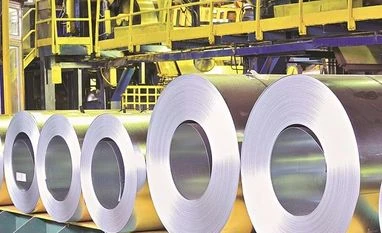 "How low tariffs have turned India into a dumping ground for aluminium scrap")












 Connect with us on WhatsApp