
ICAR can conduct field demos and trials of GM mustard this rabi season
BT-cotton is the only non-food crop allowed for commercial cultivation in India at present
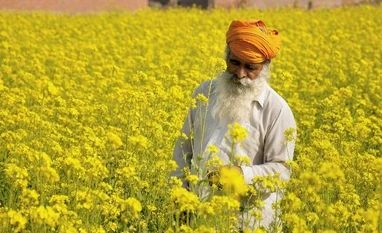 "ICAR can conduct field demos and trials of GM mustard this rabi season")
Explore Business Standard

Associate Sponsors
Co-sponsor
BT-cotton is the only non-food crop allowed for commercial cultivation in India at present
Government agri-research body ICAR can conduct field demos and trials of the recently approved GM-mustard hybrid DMH-11 this rabi season and make it available for commercial use within three years, top officials of agri think-tank NASS and TASS said on Monday.
On October 25, the environment ministry approved the "environment release" of transgenic mustard hybrid DMH-11 and the parental lines containing barnase, barstar and bar genes so that they can be used for developing new hybrids under the supervision of The Indian Council of Agricultural Research (ICAR).
Addressing a joint press conference, National Academy of Agricultural Sciences (NASS) President Trilochan Mohapatra and Trust for Advancement of Agricultural Sciences (TAAS) Chairman R S Paroda said the environment release of DMH-11 is a "landmark decision" breaking a long logjam on the release of GM food crops.
The ICAR should be in a position to conduct field demonstrations and trials of DMH-11 in the next 10-15 days in key mustard growing states -- Rajasthan, Haryana, Punjab, and Madhya Pradesh, they said.
ICAR, under aegis of the agriculture ministry, is an apex body for research and education in agriculture in India. About 111 institutes and 71 varsities function under it.
BT-cotton is the only non-food crop allowed for commercial cultivation in India at present.
Explaining the need for further trials, Mohapatra said DMH-11 has already been tested for agronomic and yield performance by the ICAR's Bharatpur-based National Research Centre on Rapeseed-Mustard but only in limited locations. At that time, it could not be tested in more locations as the technology was not deregulated.
With the environment release of DMH-11, the technology has been deregulated and can now be tested again in more locations and demonstrated in the fields as well as use the technology for developing newer hybrid varieties, he said.
"All three activities will be done simultaneously. ICAR can easily start the field demonstration from this rabi season," Mohapatra, also former Director General of ICAR, told reporters.
At present, only 10 kg of DMH-11 seeds are available. Since less quantity of seeds are available, first it can be used for demonstration purpose, some quantity can be used for field trials in more locations. After ascertaining the yield potential of the DMH-11, seed multiplication will be done, he said.
"With available seeds, ICAR can easily conduct 50-100 field demonstrations under controlled environment this rabi season, to check the performance," Trust for Advancement of Agricultural Sciences (TAAS) Chairman R S Paroda said.
Efforts are needed to produce more hybrid seed through private and public partnership so that larger area could be covered in the next cropping season, he said.
Both Mohapatra and Paroda said this entire process will take at least two years and the hybrid will be available for commercial release within three years.
Clearing apprehensions regarding DMH-11, NAAS Secretary K C Bansal said DMH-11 is not herbicide tolerant as mistaken by many. Herbicide is only required for hybrid seed production.
"Use of herbicide by farmers is not required in the fields to reap the high yield levels," he said, adding that DMH-11 gives 28 per cent higher yield than the existing varieties and should be promoted for reducing the country's import dependency on edible oils.
Bansal further said neither it has threat to honeybees nor any health risks to human beings reported so far.
India's average mustard yield is 1-1.3 tonne per hectare.
He also said it is high time the country becomes self-sufficient in edible oils as Australia has recently approved herbicide tolerant GM mustard to meet India's edible oil demand.
India has a deficit of edible oils by 55-60 per cent of total consumption. About 13.35 million tonnes of edible oil was imported in 2020-21 financial year.
(Only the headline and picture of this report may have been reworked by the Business Standard staff; the rest of the content is auto-generated from a syndicated feed.)
First Published: Oct 31 2022 | 5:17 PM IST

