Rationalise food and agriculture sops to save Rs 15,000 cr: Govt panel

Seeks making the scale of finance for agriculture credit more evidence-based
agriculture
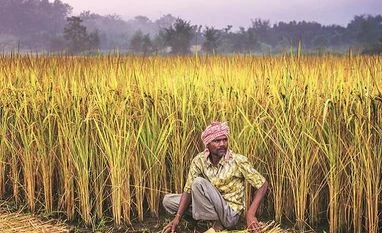
Farmer harvesting crops.
Sanjeeb Mukherjee New Delhi
3 min read Last Updated : Dec 24 2019 | 12:56 AM IST
The government can easily save at least Rs 10,000-15,000 crore annually from the amount it spends on different food, fertiliser and agriculture subsidies by adopting various corrective steps, said a high-powered panel.

This can then be invested back into the country’s rural sector by creating jobs and livelihood for the poor. 

“The panel, which was constituted to suggest ways and means through which India can become a $5 trillion economy in the next five years, has advocated measures. They include making the scale of finance for agriculture credit more evidence-based and limiting the coverage of cheap food grains under the Food Act in urban areas,” officials said.

It estimated that the government spends around Rs 4 trillion-Rs 5 trillion every year on different food and agriculture subsidies. Some of these can easily be rationalised, freeing up funds that could be channelised to create livelihood opportunities in rural India.

These opportunities could be created through empowering Farmers-Producer Organisations (FPOs), Joint-Liability Groups (JLGs) and making small and marginal farmers diversified producers, officials said. 

It also suggested providing FPOs and other forms of collectives a proper ecosystem to grow and diversify operations.

In case of agriculture credit, the panel is believed to have advocated making the scale of finance more evidence and agro-climatic conditions-based.

This will help subsidy on agriculture credit reach the right person and benefit small and marginal farmers instead of big land holders.

The government spends around Rs 15,000-18,000 crore annually in providing subsidy for short-term crop loans to farmers. In 2018-19, the central government had fixed an agriculture credit target of Rs 11 trillion.

A recent report by RBI’s internal working group (IWG), headed by its deputy governor MK Jain, also found that the predominance of agricultural loan against gold as collateral is a matter of concern as the quantum of loan must have been de-linked from the scale of finance.

“If the crop loan is not based on the scale of finance, there is a high probability that the loan amount sanctioned may be higher than the actual 

credit requirement. This ultimately leads to diversion of funds, and consequently, high incidence of indebtedness among the farmers. Furthermore, short-term crop loans are eligible for the interest subvention scheme that incentivises farmers to avail such agricultural loans, leading to misutilisation of government subsidy,” the report said.

Clearly, this is an area where the panel wants the government to work on.


On rationalisation of fertiliser subsidies, the panel suggested that the database of farmers currently available through PM-KISAN could be used to restrict fertiliser usage once it is linked to the database of land records. 

This could unnecessary leakage and pilferages could be plugged. 

It also advocated making the current DBT format for fertilisers more effective.

On the National Food Security Act (NFSA), officials said the panel was of the opinion that its open-ended nature in urban areas could be reviewed for the well-to do states.

At present, 75 per cent of population is covered under NFSA in all urban areas in all states irrespective of whether they need it or not.

Despite path-breaking suggestions from the panel, most experts said implementing some of them may be difficult due to strong political resistance.

One subscription. Two world-class reads.

Already subscribed? Log in

Subscribe to read the full story →
*Subscribe to Business Standard digital and get complimentary access to The New York Times

Smart Quarterly

₹900

3 Months

₹300/Month

SAVE 25%

Smart Essential

₹2,700

1 Year

₹225/Month

SAVE 46%
*Complimentary New York Times access for the 2nd year will be given after 12 months

Super Saver

₹3,900

2 Years

₹162/Month

Subscribe

Renews automatically, cancel anytime

Here’s what’s included in our digital subscription plans

Exclusive premium stories online

  • Over 30 premium stories daily, handpicked by our editors

Complimentary Access to The New York Times

  • News, Games, Cooking, Audio, Wirecutter & The Athletic

Business Standard Epaper

  • Digital replica of our daily newspaper — with options to read, save, and share

Curated Newsletters

  • Insights on markets, finance, politics, tech, and more delivered to your inbox

Market Analysis & Investment Insights

  • In-depth market analysis & insights with access to The Smart Investor

Archives

  • Repository of articles and publications dating back to 1997

Ad-free Reading

  • Uninterrupted reading experience with no advertisements

Seamless Access Across All Devices

  • Access Business Standard across devices — mobile, tablet, or PC, via web or app

Topics :Food subsidySubsidies

Next Story



