
IIP, CPI data raise expectations of a rate cut by RBI
Market regulator expected to cut rate by 25 basis points in its October review meeting
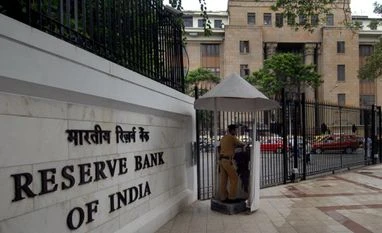 "IIP, CPI data raise expectations of a rate cut by RBI")
premium
WebinarsNew
Deep DiveNew
Explore Business Standard
Market regulator expected to cut rate by 25 basis points in its October review meeting
Recent data pointing to a slowing in industrial production growth and to a fall in retail price inflation has given room to the Reserve Bank of India (RBI) to cut its policy rate at the review meeting on August 2, believe many economists and bankers.
Not all share the belief. And, even those who think RBI will cut the rate add that the lower borrowing cost will not be able to revive investment or credit growth (which fell to a 40-year low of 5.1 per cent in 2016-17) in a hurry.
The Index of Industrial Production (IIP) expanded 1.7 per cent in May, lower than the revised 2.8 per cent rate in April. Consumer Price Index (CPI) inflation was down to a record low of 1.5 per cent in June from 2.2 per cent the previous month.
He said CPI-based inflation would be below the mandated two per cent in July as well, while picking up to slightly more than three per cent in August.
"There is no doubt that RBI will have to cut rates this time, which should be promptly passed on by banks. However, borrowing will start only when there is demand pick-up," said a banker, who did not wish to be named.
An executive director of a large public sector bank (PSB) said companies had found an alternative funding route in commercial paper and the corporate bond market. "Banks have to live with the fact that the loan market will never be the same again," he said.
He added, though, that the corporate bond market was not deep enough and might not be able to fund long-term projects. Banks' credit growth should pick up but this was unlikely in the present economic scenario.
According to another banker, credit growth by banks is in positive territory largely because of SBI and some private banks.
"Many banks have not grown their books at all even, as they are okay financially. Banks are too busy resolving bad debts and companies are busy servicing their debt. In these times of insolvency proceedings, don't expect credit growth to jump," said another executive director of a PSB.
Manoranjan Sharma, chief economist at Canara Bank, said a rate cut of 25 bps in August was a given but a pick-up in credit is a function of several factors, not only softening of interest rates. He also doesn't expect any immediate pick-up in credit growth.
Meanwhile, some other economists who'd earlier expected a pause have changed their stance.
"We are changing our rate call after the release of the June CPI inflation data," said Kaushik Das, chief economist at Deutsche Bank. "Earlier, we were expecting the central bank to maintain an extended pause. We now expect RBI to cut the policy rate by 25 bps on August 2, thereby pushing the repo rate (at which it lends to banks) down to six per cent."
According to Das, even after significant downward revisions by RBI, the June inflation print came below the lower bound of the new forecast range for the first half of 2017-18. RBI had expected first-half inflation at 2-3.5 per cent. This, said Das, opened the possibility of a cut in the August review.
JP Morgan expects a 25 bps cut in August, but adds the timing is a "close call". "We think the last two prints will give the MPC (Monetary Policy Committee) more comfort that (i) some of the food disinflation is structural and not just demonetisation-induced (ii) negative output gaps continue to sustain, as revealed by the continued softness of core inflation (iii) any impact from GST (the new goods and services tax) on the CPI basket is expected to be modest, and (iv) the monsoon is off to a reasonably good start," JP Morgan economists Sajjid Chinoy and Toshi Jain wrote in a report.
They say the inflation rate should start inching up and the July numbers could be closer to two per cent. With the impact of GST on inflation expected to be modest, JP Morgan expects headline CPI inflation to average close to four per cent in the first quarter of calendar 2018, in line with RBI's target.
"This includes the 40 bps direct impact of the HRA (house rent allowance) allowance on public sector wages which would kick in from July and accumulate over six months," the report said.
Saying the balance of possibility had shifted to a 25 bps cut in the policy rate, Aditi Nayar, principal economist at ratings agency ICRA, said this would also not be able to push investment. "It would only lead to cut in debt service cost. This would not address the issues of over-leveraged debt and unwillingness on the part of banks to lend," she said.
However, there are differing opinions and expectations, too. CARE Ratings' chief economist Madan Sabnavis said there might not be any rate cut in the August review and the MPC might wait for October to gauge the moves of the US Federal Reserve, the GST impact on prices and the effect of the HRA increase.
He said all the factors listed by RBI for not cutting the rate in its earlier review still remains. These were the impact of farm loan waivers, GST and HRA on prices.
D K Srivastava of consultants EY said the fall in CPI inflation was primarily because of deflation in food items and with double-digit deflation in pulses and vegetables. These were seasonal influences, he said. "As such, I tend to believe the MPC would postpone the rate cut," he said, even if this was not a unanimous decision.
Already subscribed? Log in
Subscribe to read the full story →

3 Months
₹300/Month
1 Year
₹225/Month
2 Years
₹162/Month
Renews automatically, cancel anytime

Premium stories handpicked daily by our editors


News, Games, Cooking, Audio, Wirecutter & The Athletic
Digital replica of our daily newspaper — with options to read, save, and share


Insights on markets, finance, politics, tech, and more delivered to your inbox
In-depth market analysis & insights with access to The Smart Investor


Repository of articles and publications dating back to 1997
Uninterrupted reading experience with no advertisements


Access Business Standard across devices — mobile, tablet, or PC, via web or app
First Published: Jul 13 2017 | 11:59 PM IST


 Connect with us on WhatsApp