India faces basic contradiction in drafting policies for renewables sector

Frequent changes in rules governing domestic equipment use in projects is slowing capacity addition
renewables sector, solar energy
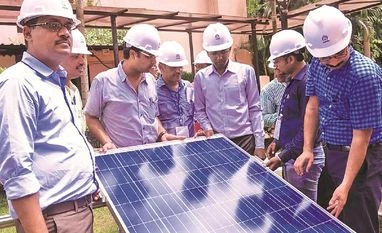
Representative Image
S Dinakar
7 min read Last Updated : Mar 23 2023 | 10:40 PM IST
India is facing a basic contradiction in drafting policies for the renewables sector. On one hand, the government seeks to boost domestic equipment manufacturing to promote “Aatmanirbharta”, a theme that echoes back to Prime Minister Indira Gandhi; on the other, it has set ambitious generation targets. Over time, these contradictions may be reconciled with a helping hand from the market and a generation of new entrepreneurs. But until then, industry officials said, they are acting as speed bumps on the road to clean energy.

The latest change involves postponing a mandate for the use of domestically manufactured modules in building out India’s solar generation, a decision that affects both developers and manufacturers and thousands of crores of rupees in investments.

In March 2021, the Ministry of New and Renewable Energy (MNRE) notified the first Approved List of Models and Manufacturers (ALMM) for solar photovoltaic (PV) modules comprising only domestic solar original equipment manufacturers (OEMs). The list excluded all foreign manufacturers — including most of the tier-I players whose equipment are in demand globally, and whose reputation is validated by investors and lenders. Developers were required to source modules from the OEMs from this list for projects bid out from April 10, 2021, effectively restricting the use of imported modules for utility-scale projects.

The ALMM mandate order coincided with a cabinet clearance of the first tranche of the Rs 4,500-crore production-linked incentive (PLI) scheme for solar modules on April 7, an MNRE document showed. But the order allowed developers of non-utility distributed solar projects, such as those developing 1 kilowatt to a few hundred megawatts, to continue importing cheaper Chinese equipment. The catch here was a levy of 40 per cent basic customs duty on modules, sending imported panel costs higher.

The ALMM order was amended in January 2022, coinciding with a Budget announcement approving Rs 19,500 crore, the second tranche for the PLI scheme. The amendment required projects applying to open-access or net metering (non-utility) projects from April 1, 2022, to source modules from the OEMs in the ALMM list. The timeline for compliance was subsequently extended to October 1, 2022, through an amendment notified in March 2022.

Then, on March 10 this year, the ALMM order was amended for a third time. “Given the challenges faced by developers in sourcing modules from domestic OEMs in a cost-competitive manner, the MNRE has put the ALMM order in abeyance for projects commissioned till March 31, 2024,” the ministry said.

“There’s volatility and uncertainty for both domestic OEMs and project developers,” said Girishkumar Kadam, senior vice-president at Mumbai-based ratings agency ICRA, a US Moody’s affiliate. “The immediate impact is negative on domestic OEMs because ALMM was a supporting factor to get orders,” he added.

But the impact of the order on smaller project developers may not be positively significant because the time period is short, said Anil Bhatt, business CEO of distributed generation, Amplus Solar, a unit of Malaysian state oil company Petronas. Of greater concern is the requirement for projects to be commissioned within a year, Bhatt said, seeking a longer extension.

Smaller developers undertaking open-access projects are responsible for land, transmission, grid access, and approvals from state authorities, unlike utility-scale projects where the government or the nodal agency takes care of everything. So, commissioning projects can suffer delays in securing approvals. The government should have applied the March 2024 deadline to the project start date rather than commissioning, Bhatt said.

There is a question mark on what happens if developers import panels and start projects, but commissioning is pushed back beyond March 2024 because of delays in securing connectivity from state utilities. “It’s a grey area for now. Clarifications may be needed,” Kadam said.

The government cannot force smaller developers to buy from domestic manufacturers, another solar developer said. At least, developers working in commercial and industrial (C&I) or open-access projects must be allowed to source equipment from the most competitive source, the official added.

“Our investors and lenders are particular that the equipment used in our projects are sourced from tier-I manufacturers because of the 20-25-year life cycle of solar equipment,” said Pinaki Bhattacharyya, CEO, Amp Energy India. There are only a handful of tier-I players such as Adani on the ALMM list but they are exporting their modules, he added.

“Domestic OEMs are getting a very good realisation on the export market,” Kadam said. That is also impeding availability of quality modules for domestic developers. Indian exports of solar PVs and modules rose over four-fold last year over a year earlier, according to Mercom data.

India must install around 30 Gw of solar a year if it has to meet 500 Gw of overall renewable capacity by 2030, Bhattacharyya said. “We are far away from the 30 Gw of actually commercially proven quality manufacturing in India. And total commercial cell-making capacity, a key factor in module manufacturing, in India is hardly a few gigawatts,” he added.

Most Indian manufacturers still import cells to assemble modules. Though module prices have fallen, China has increased the price of cells. Mono PERC module rates declined from a 28 cents/watt peak to 22 cents/watt in March, ICRA said, citing Infolink data. But cell prices rose to 14 cents/watt this month from 12 cents/watt in December 2022. As a result, given the lack of backward integration by domestic players, the cost of sourcing imported modules from China, including basic customs duty, remains competitive in relation to the cost of sourcing modules from domestic OEMs using imported solar PV cells for manufacturing, Kadam said. For the domestic OEMs to be competitive, cell prices must remain below 12 cents/watt, assuming the prevailing module prices sustain without any further decline.

There will always be some dependency on China for the next five years until Indian manufacturers spread across the entire value chain from polysilicon to modules, said Kadam. As of now, only a few players such as Reliance and Adani have talked of an end-to-end value chain. But solar project developers are also entering into tolling arrangements, and acquiring stakes in domestic manufacturing facilities, Kadam said.

Non-utility solar is key to India meeting its renewable targets as utility tenders slow. But ALMM affects open-access and distributed solar projects more. Some experts say that India will need 800 Gw of renewables to achieve the target of 50 per cent of continuous generation from non-fossil fuel sources by 2030 because of the low efficiency of solar modules, and lack of viable battery storage. The country would then need to add 80 Gw annually. But tenders for solar and wind issued annually have declined, to about 28 Gw in 2022 from 40 Gw in 2019, according to US think tank Institute for Energy Economics and Financial Analysis.

Off beam
  • India is facing a basic contradiction in drafting policies for the renewables sector
  • The latest change involves postponing a mandate (ALMM) for the use of domestically manufactured modules in building out India’s solar generation
  • On March 10, the ALMM order was amended again, putting the domestic procurement mandate in abeyance for projects commissioned until March 31, 2024
  • Another grey area is what happens if developers import panels and start projects but commissioning is pushed back beyond March 2024 because of delays in securing connectivity from state utilities
  • India must install around 30 Gw of solar a year if it has to meet 500 Gw of renewable capacity by 2030
  • There will be some dependency on China for the next 5 years until Indian manufacturers spread across the entire value chain from polysilicon to modules

One subscription. Two world-class reads.

Already subscribed? Log in

Subscribe to read the full story →
*Subscribe to Business Standard digital and get complimentary access to The New York Times

Smart Quarterly

₹900

3 Months

₹300/Month

SAVE 25%

Smart Essential

₹2,700

1 Year

₹225/Month

SAVE 46%
*Complimentary New York Times access for the 2nd year will be given after 12 months

Super Saver

₹3,900

2 Years

₹162/Month

Subscribe

Renews automatically, cancel anytime

Here’s what’s included in our digital subscription plans

Exclusive premium stories online

  • Over 30 premium stories daily, handpicked by our editors

Complimentary Access to The New York Times

  • News, Games, Cooking, Audio, Wirecutter & The Athletic

Business Standard Epaper

  • Digital replica of our daily newspaper — with options to read, save, and share

Curated Newsletters

  • Insights on markets, finance, politics, tech, and more delivered to your inbox

Market Analysis & Investment Insights

  • In-depth market analysis & insights with access to The Smart Investor

Archives

  • Repository of articles and publications dating back to 1997

Ad-free Reading

  • Uninterrupted reading experience with no advertisements

Seamless Access Across All Devices

  • Access Business Standard across devices — mobile, tablet, or PC, via web or app

Topics :renewable energysolar energyPLI scheme

Next Story



