India is still in the grip of ad hoc arbitration: N G Khaitan
Interview with President, ICA
Namrata Acharya With institutional arbitration yet to emerge as a preferred means of dispute resolution among Indian companies, the Indian Council of Arbitration (ICA) is collaborating with the law ministry to promote institutional arbitration in public sector companies.
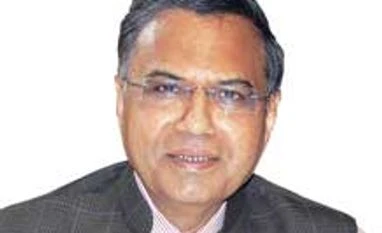
N G Khaitan, president, ICA, in an interview with
Namrata Acharya, delineates the challenges and way forward for the arbitration sector in India. Edited excerpts:
What is the present state of arbitration in India? Unfortunately, India is still in the grip of ad hoc arbitration. Institutional arbitration has so far just taken its roots in India, but it has not really kick-started. All over the developed world, almost 90 per cent of their commercial disputes are resolved through mediation or arbitration.
What steps is ICA taking to promote institutional arbitration? As president of ICA for the past four years, I am propagating the advantages of institutional arbitration, and why it needs to be promoted. This facet, as to why India needs to promote institutional arbitration, is also recognised by the central government. In the ICA, I have redrafted my rules, to ensure the arbitrators, give their awards in a time-bound manner.
Recently, I went to Odisha, where the Chief Minister had invited all public sector units for a meeting. We suggested they could have a clause for institutional arbitration in their commercial contracts. Again, through co-partnership with the law ministry, we will suggest government companies to have the provision of institutional arbitration in their commercial contracts.
Why are most of the arbitration cases concerning Indian corporate entities done outside India?
So long, the courts in India were interfering with the awards, more particularly with foreign awards. At the same time, most arbitration in India were conducted through ad-hoc mechanism, which was not time bound and costly too. Only last year did the SC pass a landmark judgment that said that a foreign award was not amenable to challenge in the courts in India. This has helped institutions in India to do international commercial arbitration. In ICA, we are framing separate rules for international arbitration, where we are providing for time bound schedule at a reasonable cost.
Do you think the laws in India are not in favour of institutional arbitration?
The Arbitration and Conciliation Act, 1996, is based on UNCITRAL model, a model accepted by all developed countries. Section 11 (sub section 5 & 6) specifically provided that if for circumstances referred to under that section, the parties have failed to appoint an arbitrator, then any one of the parties can apply to the Chief Justice of a High Court for an appointment of arbitrator. The section also provided that the Chief Justice can designate any person or institution, designated by him to appoint an arbitrator.
Use of the word 'any person' meant that the judge could appoint himself as an arbitrator or he could designate any of his puny judges to appoint arbitrators. As a president of ICA, I met several Chief Justices and requested that if they also could designate any institution of their choice, not necessarily the ICA, to be the appointing authority.
There was a judgment in 2005 by seven bench judges of the Supreme Court, called the Patel Engineering case, where it held that the Chief Justice or any of his designated judge could not entitle any institution to appoint arbitrator, but they could seek the opinion of an institution in the matter of nominating an arbitrator. The general tendency among retired judges is take up arbitration as vocation. Normally, if the appointments are done by the Chief Justices or their designated judges, such appointments are generally made in favour of retired judges.
How will the proposed amendment in the Arbitration and Conciliation Act, 1996, promote institutional arbitration?
A few years ago, the central government came out with a consultative paper for amendment in the Arbitration Act, to say that any commercial contract of the value of Rs 5 crore would have to be resolved through institutional arbitration.
The amendment is not in effect, but that is the need of the hour. Even in countries like Uzbekistan, we find all commercial contracts are resolved through a court of arbitration, which basically works like an institution. The awards are generally not amenable to challenges, and therefore, it has in it an element of finality, which ensures justice delivery mechanism in a time-bound manner.

 "India is still in the grip of ad hoc arbitration: N G Khaitan")

