
India may be heading towards stagflation, says Amit Mitra
Mitra said India is already suffering from rising inflation and unemployment simultaneously
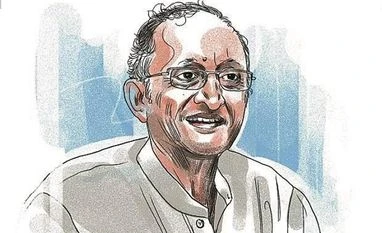 "India may be heading towards stagflation, says Amit Mitra")
WebinarsNew
Deep DiveNew
Explore Business Standard
Mitra said India is already suffering from rising inflation and unemployment simultaneously
Amit Mitra, West Bengal's former finance minister and current chief advisor to Chief Minister Mamata Banerjee on Monday said he fears India may be heading towards stagflation.
Mitra, an economist by training said, India is already suffering from rising inflation and unemployment simultaneously.
Wholesale inflation is 14.2 per cent and unemployment' has expanded by 10.48 per cent. Now, without private investment (increasing), we may be heading toward stagflation, Mitra said, speaking virtually at the CFO Leadership Summit, organised by the Institute of Cost Accountants of India.
Stagflation is defined as situation with persistent high inflation combined with high unemployment and stagnant demand in a country's economy.
Mitra said, India is facing such a precarious situation due to "faulty economic policies" of the Union government which began with demonitisation in 2016, followed by launching a complex Goods and Services Tax, "and now wrong policies to manage the economy in the Covid times that does not boost private investment or empower people to spend more."
Infrastructure capital expenditure (resorted to by the Government) will have a time lag and we need immediate spending and for that the government has to give money directly into the hands of the people. Union finance minister accepts private investment is not happening and is asking different departments to spur (public) capex but that will not yield immediate results, he said.
Speaking of West Bengal, Mitra claimed the state had "adopted the right policies" including lowering stamp duty and circle rates to boost private sector investment, which he said led to a "positive state GDP growth of 1.2 per cent when the country had a de-growth of 7.7 per cent in FY21.
Many countries put money into the hands of their population to revive the economy, he said. However, this has not been replicated in India.
As a result, "India has ranked among the most unequal country in the World Inequality Report 2022, where top one per cent of the population now controls 22 per cent of the national income and bottom 50 per cent has a share of just 13 per cent, of the country's income, the former state finance minister said.
(Only the headline and picture of this report may have been reworked by the Business Standard staff; the rest of the content is auto-generated from a syndicated feed.)
First Published: Dec 20 2021 | 9:39 PM IST


 Connect with us on WhatsApp