
India needs Green Revolution 2.0 to make agri more sustainable: RBI
An RBI article said "new emerging challenges warrant a second green revolution along with next-generation reforms"
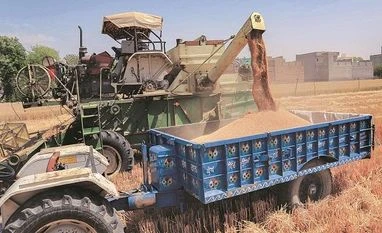 "India needs Green Revolution 2.0 to make agri more sustainable: RBI")
WebinarsNew
Deep DiveNew
Explore Business Standard
An RBI article said "new emerging challenges warrant a second green revolution along with next-generation reforms"
India needs a second green revolution along with the next generation of reforms with a view to make agriculture more climate-resistant and environmentally sustainable, said an RBI article on farm sector challenges.
Observing that Indian agriculture has exhibited remarkable resilience during the COVID-19 period, the article said "new emerging challenges warrant a second green revolution along with next-generation reforms".
Despite the success in terms of production that has ensured food security in the country, food inflation and its volatility remain a challenge, which requires supply-side interventions such as higher public investment, storage infrastructure and promotion of food processing, said the article titled 'Indian Agriculture: Achievements and Challenges'.
The article said Indian agriculture scaled new heights with record production of various foodgrains, commercial and horticultural crops, exhibiting resilience and ensuring food security during the COVID-19 period.
"The sector, however, confronted various challenges, mitigation of which requires a holistic policy approach," it said.
For instance, crop productivity in India is much lower than other advanced and emerging market economies due to various factors, like fragmented landholdings, lower farm mechanisation and lower public and private investment in agriculture.
Second, the article said the current overproduction of crops like rice, wheat and sugarcane, has led to rapid depletion of the ground-water table, soil degradation and massive air pollution raising questions about the environmental sustainability of current agricultural practices in India.
Also, despite surplus production in many of the commodities, food inflation and volatility in prices continue to remain high causing inconvenience to consumers and low and fluctuating income for farmers.
"Addressing these challenges would require a second green revolution focussed on the agriculture water-energy nexus, making agriculture more climate resistant and environmentally sustainable. The use of biotechnology and breeding will be important in developing eco-friendly, disease-resistant, climate-resilient, more nutritious and diversified crop varieties," it said.
Wider use of digital technology and extension services will be helpful in information sharing and generating awareness among the farmers.
It also stressed that better post-harvest loss-management and a revamp of co-operative movement through the formation of farmer-producer organisations (FPOs) can arrest the volatility in food prices and farmers' income and help harness the true potential of Indian agriculture.
(Only the headline and picture of this report may have been reworked by the Business Standard staff; the rest of the content is auto-generated from a syndicated feed.)
First Published: Jan 17 2022 | 8:22 PM IST

