Associate Sponsors

Co-sponsor

India to overcome Covid-19 pandemic losses by FY35, says RBI report

6.5-8.5% is the feasible range for medium-term steady state GDP growth in India
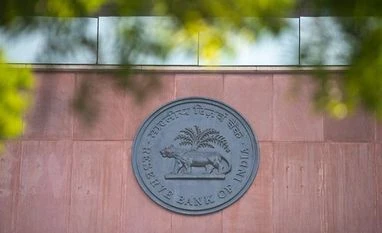
RBI, Reserve Bank of India
Photo: Shutterstock
Manojit Saha Mumbai
4 min read Last Updated : Apr 30 2022 | 12:16 AM IST
It is only by 2034-35 that India is expected to make good the losses arising from the pandemic, the “Currency and Finance Report” of the Reserve Bank of India (RBI) has said.

“Taking the actual growth rate of (-) 6.6 per cent for 2020-21, 8.9 per cent for 2021-22 and assuming growth rate of 7.2 per cent for 2022-23, and 7.5 per cent beyond that, India is expected to overcome Covid-19 losses in 2034-35,” said the report, released once every year.

“The output losses for individual years have been worked out to Rs 19.1 lakh crore, Rs 17.1 lakh crore and Rs 16.4 lakh crore for 2020-21, 2021-22 and 2022-23, respectively,” it said. GDP growth for 2020-21 contracted by 6.6 per cent.

The report for 2021-22 year has the theme “Revive and Reconstruct” in the context of nurturing a durable recovery post-Covid and raising trend growth in the medium term.

The RBI has said the report reflects the views of the contributors and not its own. The report observed the feasible range for medium-term steady state GDP growth in India worked out to 6.5-8.5 per cent.

It said a timely rebalancing of monetary and fiscal policies would likely be the first step to achieving such growth. The first step, according to the report, is withdrawing the huge surplus liquidity present in the banking system now. 

“First, the large surplus liquidity overhang has to be withdrawn -- every percentage point increase in surplus liquidity above 1.5 per cent of NDTL (net demand and time liabilities) causes average inflation to rise by 60 basis points in a year,” the report said.

In this context, the report said monetary policy had to assign priority to price stability as the nominal anchor for the growth trajectory. The RBI had prioritised growth over inflation in the past two years due to the Covid shock and has returned to giving precedence to inflation only in the April 2022 policy.
 
“Price stability is a necessary precondition for strong and sustainable growth,” the report said.

The report said growth was at risk once general government debt exceeded the threshold of 66 per cent of GDP.

“Reducing debt to more sustainable levels that are compatible with the growth trajectory being envisaged for a post pandemic Indian economy will be daunting. Even under best possible macroeconomic outcomes, general government debt may not decline below 75 per cent of GDP over the next five years,” the report said, while cautioning that if there were adverse scenarios, debt might hover above 90 per cent of GDP all through.

“A medium-term strategy of debt consolidation aimed at reducing debt to below 66 per cent of GDP over the next five years is, therefore, important to secure India’s medium-term growth prospects.”

Another issue is addressing structural constraints, it said.

Some of the reforms the government announced -- like goods and services tax, the production-linked incentive scheme, the Insolvency and Bankruptcy Code -- augmented with other measures to reverse the sustained decline in private investment and low productivity in the economy.

“What is needed includes access to litigation free low cost land; raising the quality of labour through large scale expansion of public expenditure on education, health and the Skill India Mission; reducing the cost of capital for industry and improving resource allocation in the economy by promoting competition,” the report prescribed.

To benefit from the post-pandemic global recovery in demand, the report said preconditions such as improving the quality of exports through greater emphasis on innovation and R&D, easier access to critical inputs -- both domestic and imported -- and more effective free-trade agreements based on trade complementarities would be essential.

“The growing focus on digitalisation offers immense opportunities,” the report noted.

RBI Governor Shaktikanta Das, in the foreword to the report, said, “The resilience of certain sectors like agriculture and allied activities, information technology services, exports, digitalisation and renewable energy during the COVID-19 crisis gives us the confidence that the Indian economy can stage a strong comeback.”

“What adds to this confidence is the way certain other sectors used this crisis to rebuild and reconfigure. These sectors would include the organised corporate sector; the financial sector; start-ups; and more recently, the manufacturing sector,” he added.
Recovery path 
  • 6.5-8.5% is the feasible range for medium-term steady state GDP growth in India
  • Timely rebalancing of monetary and fiscal policies first step towards achieving feasible growth
  • Need to withdraw huge surplus liquidity present in the banking system
  • Reducing general govt debt to below 66% of GDP over next 5 years is important to secure India’s medium-term growth prospects
  • Growing focus on digitalisation offers immense opportunities
  • Source: RBI's currency and finance report

One subscription. Two world-class reads.

Already subscribed? Log in

Subscribe to read the full story →
*Subscribe to Business Standard digital and get complimentary access to The New York Times

Smart Quarterly

₹900

3 Months

₹300/Month

SAVE 25%

Smart Essential

₹2,700

1 Year

₹225/Month

SAVE 46%
*Complimentary New York Times access for the 2nd year will be given after 12 months

Super Saver

₹3,900

2 Years

₹162/Month

Subscribe

Renews automatically, cancel anytime

Here’s what’s included in our digital subscription plans

Exclusive premium stories online

  • Over 30 premium stories daily, handpicked by our editors

Complimentary Access to The New York Times

  • News, Games, Cooking, Audio, Wirecutter & The Athletic

Business Standard Epaper

  • Digital replica of our daily newspaper — with options to read, save, and share

Curated Newsletters

  • Insights on markets, finance, politics, tech, and more delivered to your inbox

Market Analysis & Investment Insights

  • In-depth market analysis & insights with access to The Smart Investor

Archives

  • Repository of articles and publications dating back to 1997

Ad-free Reading

  • Uninterrupted reading experience with no advertisements

Seamless Access Across All Devices

  • Access Business Standard across devices — mobile, tablet, or PC, via web or app

Topics :CoronavirusIndian EconomyRBI

Next Story


