India will get frictionless access to a major trading hub: Thani Al Zeyoudi

'The UAE welcomes a wider India-GCC trade deal', said Zeyoudi
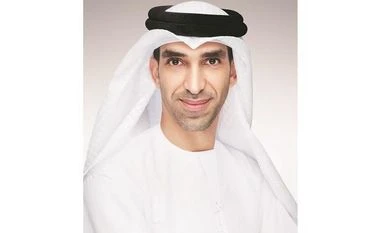
Thani Al Zeyoudi
Thani Bin Ahmed Al Zeyoudi, UAE minister of state for foreign trade
Surajeet Das Gupta
6 min read Last Updated : Mar 05 2022 | 6:02 AM IST
With the signing of a historic Comprehensive Economic Partnership Agreement recently between India and the UAE, finance and trade relations between the two countries are expected to get a boost. In an email interview, Thani Bin Ahmed Al Zeyoudi, UAE minister of state for foreign trade, tells Surajeet Das Gupta about the contours of the deal. Excerpts:

How does the agreement help both countries and what are the focus areas?

The UAE-India Comprehensive Partnership Agreement (CEPA) has been constructed to benefit both sides, and it will do this by accelerating the free flow of goods, rebuilding supply chains, increasing trade volumes and creating new investment and joint-venture opportunities. The CEPA substantially removes or reduces tariffs and offers companies in both countries access to government procurement, and facilitates SME collaboration and global expansion.

Specifically, for the UAE, it improves market access to the world’s fifth largest economy and opens new opportunities in key export sectors such as aluminium, copper, steel and polymers like polyethylene and polypropylene. Importantly, it provides new avenues for our service sector, from finance and telecom to health and tourism, and contributes to our food security agenda through expanded investment in agricultural and logistics sectors. According to our models, this deal will add $9 billion to UAE’s GDP by 2030.

For India, the CEPA will remove or reduce tariffs on 90 per cent of products. India will also gain frictionless access to a major trading hub at a global crossroads, strategically positioned between Asia, Europe and Africa, and with direct connectivity to more than 400 cities around the world — all supported by a world-class logistics infrastructure. We also offer Indian investors, manufacturers and industrialists a dynamic, open and business-friendly environment that now allows 100 per cent foreign ownership onshore, providing the ideal platform for growth in the heart of a rapidly developing region.

What are the key safeguards in the agreement to protect local industry and third-party exports?

The CEPA establishes a preferential treatment on trade remedy measures in order to ensure fair competition between products as well as enabling a clear and transparent process to initiate such investigations. The CEPA also enables consultations before the initiation of a trade remedy investigation and establishes a mechanism for bilateral safeguard measures if imports of a product under tariff elimination increases in such quantities so as to cause injury to the domestic industry. This agreement also ensures that no export subsidy will be used on the export of products destined to the other country.

What is the UAE looking to achieve through the agreement? Which of its industries will benefit?

Throughout 2022, both to mark our nation’s golden jubilee and also in response to the ongoing challenges of Covid-19, the UAE announced a series of bold initiatives to more than double the economy from Arab Emirates Dirham (AED) 1.4 trillion ($0.38 trillion) to AED 3 trillion ($0.82 trillion) in 10 years. Our strategy is built on positioning the country as a global hub for business, investment and innovation, enhancing our competitiveness and attracting all forms of capital — financial, technological and human.

Strengthening international trade ties was one of the major strategies to achieve this, and beginning in the summer we reached out to key partners around the world to open negotiations. India responded positively and enthusiastically, resulting in a deal concluded in record time.

In terms of industries, this is a comprehensive deal, so there are no special areas of focus, but as mentioned above, we have secured favourable access for exports such as aluminium, copper, steel and polymers. Also, before the CEPA, we saw multi-million-dollar investments in priority areas such as solar power, food corridors, logistics infrastructure and telecom. We certainly expect to see more of those collaborations in the aftermath of the deal.

How will the agreement help in building broader trade between India, UAE, the US and Israel through the West Asian quad? What are the advantages of such a co-operation, and what are the modalities of such an informal understanding?

This is a bilateral deal and is focused on enhancing collaboration, trade and investment flows and business opportunities between two nations that are long-standing economic partners. Our CEPA agenda is broad, and we are speaking to many nations with whom we see positive, mutually beneficial trade and investment potential. Our initial target in the summer was eight countries, including India and Israel, and now that we have concluded our agreement with India, we expect Israel and also Indonesia to follow in the coming weeks. We are also initiating talks with Turkey, the Philippines, Chile and Colombia, with other nations and trading blocs expressing interest, also.

We certainly value our relationships with India, Israel and the US, and continue to explore new areas of collaboration in the fields of trade, technology, logistics, tourism and infrastructure. The CEPAs with India and Israel will only accelerate that process.

How will the agreement help India access a larger market in the Arab and African markets? Will UAE lend a helping hand when it comes to signing an agreement with the Gulf Cooperation Council with which India was looking to sign an FTA?

The UAE is a major international trade hub and, due to its location and networks, a gateway to not just the wider West Asia but Africa and Europe as well. More than half of the world’s population — some four billion people — live within an eight-hour flight, and UAE-based Emirates SkyCargo is now the biggest cargo airline in the world. In addition, Jebel Ali Port in Dubai is now ranked the ninth busiest container port in the world, while 2.4 per cent of all ocean container trade transits through the UAE. This capability will help Indian exporters move their goods efficiently and rapidly to a whole range of markets.

The UAE welcomes a wider India-GCC trade deal. Our CEPA with India doesn’t preclude a region-wide deal and indeed there is a specific article in the agreement that leaves this possibility open.

There were plans to have an India Mart in Jebel Ali. Can you give us details of how it will work and benefit Indian companies?

India Mart has been established by DP World, the operator of Jebel Ali Port, to provide a dedicated warehousing facility for Indian businesses and manufacturers to not only trade with the UAE but use the UAE as a springboard to export into the GCC and Africa. As such, it should help Made in India products reach a much wider market.

One subscription. Two world-class reads.

Already subscribed? Log in

Subscribe to read the full story →
*Subscribe to Business Standard digital and get complimentary access to The New York Times

Smart Quarterly

₹900

3 Months

₹300/Month

SAVE 25%

Smart Essential

₹2,700

1 Year

₹225/Month

SAVE 46%
*Complimentary New York Times access for the 2nd year will be given after 12 months

Super Saver

₹3,900

2 Years

₹162/Month

Subscribe

Renews automatically, cancel anytime

Here’s what’s included in our digital subscription plans

Exclusive premium stories online

  • Over 30 premium stories daily, handpicked by our editors

Complimentary Access to The New York Times

  • News, Games, Cooking, Audio, Wirecutter & The Athletic

Business Standard Epaper

  • Digital replica of our daily newspaper — with options to read, save, and share

Curated Newsletters

  • Insights on markets, finance, politics, tech, and more delivered to your inbox

Market Analysis & Investment Insights

  • In-depth market analysis & insights with access to The Smart Investor

Archives

  • Repository of articles and publications dating back to 1997

Ad-free Reading

  • Uninterrupted reading experience with no advertisements

Seamless Access Across All Devices

  • Access Business Standard across devices — mobile, tablet, or PC, via web or app

Topics :India UAECEPAQ&A

Next Story


