Indian banks to face $65-bn capital shortage by FY19, cautions Fitch

The ratings agency cut its capital requirement estimate to $65 bn from $90 bn
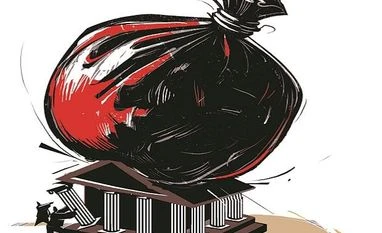
bad loans, debt, loan, banks, finance
Abhijit Lele Mumbai
Last Updated : Sep 12 2017 | 10:56 AM IST
Flagging the negative effect of a weak capital base, ratings agency Fitch on Tuesday said Indian banks might require around $65 billion of additional capital to meet the new Basel-III capital standards by March 2019 (financial year 2018-19).

The ratings agency has reduced its capital requirement estimate to $65 billion from its earlier assessment of $90 billion.

Capital needs have fallen from its previous estimate of $90 billion largely as a result of asset rationalisation and weaker-than-expected loan growth, Fitch said.

Even so, state banks, which account for 95 per cent of the estimated shortage, have limited options to raise the capital they still require, the ratings agency said.

Prospects for internal capital generation are weak and low investor confidence impedes access to the equity capital market, Fitch said in a statement.


Weak capital positions have a major negative influence on Indian banks' Viability Ratings, which will come under more pressure if the problem is not addressed, the ratings agency added.

Access to the additional Tier-I (AT1) capital market has improved in recent months, reflecting state support to help state banks avoid missing coupon payments. However, around two-thirds of the capital shortage is in the form of common equity Tier-I (CET1).


State banks are likely to be dependent on the state to meet core capital requirements. The government is committed to investing only another $3 billion in fresh equity for 21 state banks over FY18 and FY19. It has already provided most of the originally budgeted $11 billion.

Fitch believes that the government would have to pump in more than $6 billion even on a bare minimum basis (excluding buffers). This government will have to do that if it is to raise loan growth, address weak provision cover, and aid in effective non-performing loan (NPL) resolution, the ratings agency said.

The gross NPL ratio reached 9.7 per cent in FY17, up from 7.8 per cent in FY16.


The NPL resolution process being led by the Reserve Bank of India (RBI) could potentially release capital if recovery rates are as high as the banks and the government are hoping for, added Fitch.

One subscription. Two world-class reads.

Already subscribed? Log in

Subscribe to read the full story →
*Subscribe to Business Standard digital and get complimentary access to The New York Times

Smart Quarterly

₹900

3 Months

₹300/Month

SAVE 25%

Smart Essential

₹2,700

1 Year

₹225/Month

SAVE 46%
*Complimentary New York Times access for the 2nd year will be given after 12 months

Super Saver

₹3,900

2 Years

₹162/Month

Subscribe

Renews automatically, cancel anytime

Here’s what’s included in our digital subscription plans

Exclusive premium stories online

  • Over 30 premium stories daily, handpicked by our editors

Complimentary Access to The New York Times

  • News, Games, Cooking, Audio, Wirecutter & The Athletic

Business Standard Epaper

  • Digital replica of our daily newspaper — with options to read, save, and share

Curated Newsletters

  • Insights on markets, finance, politics, tech, and more delivered to your inbox

Market Analysis & Investment Insights

  • In-depth market analysis & insights with access to The Smart Investor

Archives

  • Repository of articles and publications dating back to 1997

Ad-free Reading

  • Uninterrupted reading experience with no advertisements

Seamless Access Across All Devices

  • Access Business Standard across devices — mobile, tablet, or PC, via web or app

Next Story



