Indian position on food security at WTO flawed: Jagdish Bhagwati
Interview with Professor, Columbia University
Nayanima Basu The National Food Security Act,2013, will prove to be counterproductive for the ruling United Progressive Alliance government, according to renowned economist and professor of economics and law at Columbia University
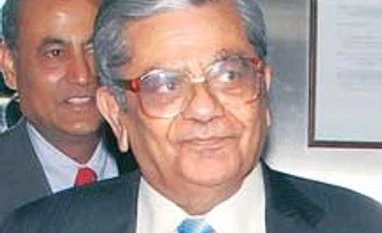
Jagdish Bhagwati. In an interview with Nayanima Basu, he says if the World Trade Organization (WTO) talks in Bali, where food security is one of the important issues, fail, it will adversely impact India. Edited excerpts:
Is the proposed WTO Peace Clause enough for countries like India and the G-33 coalition of countries that want to reform the subsidy regime under global trading norms considering the rise in food prices globally? India is going out on a limb on its G-33 proposal which has attracted the response of the Peace Clause. We need to bring agricultural subsidies everywhere under discipline and to object to that for India is to believe that our agricultural sector will remain forever in need of price support. This defeatist assumption also was responsible for our dragging our feet on special protectionist safeguards for our agriculture earlier.
Experts have often linked the National Food Security Act with India's push for removal of the cap on food subsidies under WTO rules. The folly of the right to food legislation and its associated demand for added spending when revenues are decelerating due to slow growth for sometime now is so obvious that the UPA government is now courting added inflation which, in turn, will harm the poor and the middle class, and in fact backfire on the government during the forthcoming elections.
The Indian position at the WTO is the other side of the same flawed coin and it is going to cost us credibility among informed experts on the subject.
What if the upcoming ninth WTO ministerial conference in Bali turns out to be yet another deadlocked round like the previous ones? How will it impact India? If it prevents Bali from being successful, it will weaken the WTO further, and this cannot be good for India. India, unlike the far more successful China which can stand on its own two feet in the international arena, would suffer from a weakening of the WTO which would become less credible as an institution.
How do you view the prospects of a Trans-Pacific Partnership (TPP) and Transatlantic Trade and Investment Partnership (TTIP) driven mainly by the US? Does India stand a chance? We can be sure that India would continue to become a laughing stock, not just because it looks poised for economic disaster at home, but also because it would be seen as being out of step in the progress being made on restraining production and trade distorting agricultural subsidies. What a prospect for our country!

 "Indian position on food security at WTO flawed: Jagdish Bhagwati")

