Indian promoters likely to give personal guarantee on foreign assets

RBI proposal a departure from current norms under Fema
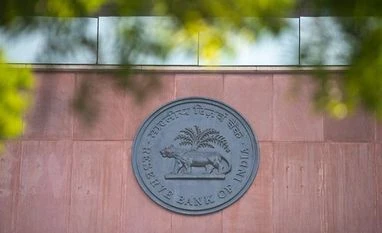
RBI, Reserve Bank of India
Photo: Shutterstock
Anup Roy Mumbai
4 min read Last Updated : Aug 10 2021 | 6:04 AM IST
In a major shift from its earlier stance, the Reserve Bank of India (RBI) on Monday proposed allowing Indian promoters to issue personal guarantees for overseas firms in which they have acquired a controlling stake, albeit with limits.

At the same time, an Indian company can pledge its foreign shareholding to raise funds overseas. Local companies can even pledge their Indian assets to raise funds for overseas entities, but within prescribed limits.

The guarantees, either by an individual or a corporate entity in India, should not be “open-ended”. In other words, there will be limits and conditions on how much guarantee can be issued by the Indian promoter or the parent Indian firm.

Still this is a change of stance by the central bank from its existing norms as spelt out in its Foreign Exchange Management Act (FEMA), 2000.

The extant FEMA rules say: “... no person resident in India shall give a guarantee or surety in respect of, or undertake a transaction, by whatever name called, which has the effect of guaranteeing, a debt, obligation or other liability owed by a person resident in India to, or incurred by, a person resident outside India.”


The draft guidelines on FEMA, 2021, now say guarantees may be issued to or on behalf of the foreign entity or its step-down operating subsidiary in which the Indian entity has acquired control through the foreign entity, including “personal guarantee by the resident individual promoters of such Indian entity”.

“Where the guarantee is extended as above by a promoter, which is a body corporate or an individual, the Indian entity shall be a part of the ‘promoter group’ …” as defined by capital markets regulations.

The guarantee, to the extent of the amount invoked, will no longer be part of non-fund-based exposure but will be considered lending, the draft said.
KEY PROPOSALS
  • Indian promoters can issue personal guarantees, RBI draft suggests
  • Foreign assets can be pledged to raise funds for Indian entities 
  • Indian assets can also be pledged for raising funds for foreign entities
  • NoC from banks to suffice instead of RBI permission in most cases
  •  ‘Strategic sector’, where govt would fix investment limit, introduced
It also said where a guarantee had been extended jointly by two or more Indian entities to a foreign entity, 100 per cent of the amount of such a guarantee “shall be reckoned towards the individual limits of each of such Indian entities”.

The rules were proposed through two draft guidelines on the RBI website. The aim is to enable ease of doing business by offering fewer prior approvals and simplified processes. The draft guidelines can be made into official rules after they receive public feedback till August 23.

Among several changes in the draft guidelines, the central bank said Indian companies would not be required to take permission for issuing performance or corporate guarantees for their overseas assets if the guarantee was within limits and fulfilled certain conditions. A no-objection certificate from the local lender will be enough for most purposes.

The RBI said apart from the equity investment route, an Indian entity could also “lend or invest in any debt instruments issued by a foreign entity or extend non-fund-based commitments to or on behalf of a foreign entity including its step-down subsidiary”.

Such debt instruments issued by a foreign entity should be duly backed by a loan agreement, and the rate of interest fixed should be on an “arm’s length basis”. This means that the interest rate should not be fixed based on the amount invested.

If a financial commitment is made by a group company, “any fund-based exposure to or from the Indian entity shall be deducted from the ‘net worth’ of such group company for computing its financial commitment limit”.

According to a senior banker, if these rules are made into law, it will open a floodgate of both inbound and outbound foreign direct investment.

“This is a major step towards capital convertibility. If you read it carefully, the RBI is trying to align the outbound overseas direct investment (ODI) rules with inbound foreign direct investment (FDI) rules,” the banker said, requesting anonymity. 

One of the drafts also proposed to introduce a definition of ‘strategic sector’, which was missing in the earlier FEMA rules.

“Strategic sector” will include energy and natural resources sectors such as oil, gas, coal and mineral ores or any other sector as advised by the Central government. 

While the “financial commitment”, or investment in equity plus debt and non-fund based commitment, of a company will continue to be at 400 per cent of its net worth, the strategic sector investment limit will be left to the government to determine, the guidelines said.

One subscription. Two world-class reads.

Already subscribed? Log in

Subscribe to read the full story →
*Subscribe to Business Standard digital and get complimentary access to The New York Times

Smart Quarterly

₹900

3 Months

₹300/Month

SAVE 25%

Smart Essential

₹2,700

1 Year

₹225/Month

SAVE 46%
*Complimentary New York Times access for the 2nd year will be given after 12 months

Super Saver

₹3,900

2 Years

₹162/Month

Subscribe

Renews automatically, cancel anytime

Here’s what’s included in our digital subscription plans

Exclusive premium stories online

  • Over 30 premium stories daily, handpicked by our editors

Complimentary Access to The New York Times

  • News, Games, Cooking, Audio, Wirecutter & The Athletic

Business Standard Epaper

  • Digital replica of our daily newspaper — with options to read, save, and share

Curated Newsletters

  • Insights on markets, finance, politics, tech, and more delivered to your inbox

Market Analysis & Investment Insights

  • In-depth market analysis & insights with access to The Smart Investor

Archives

  • Repository of articles and publications dating back to 1997

Ad-free Reading

  • Uninterrupted reading experience with no advertisements

Seamless Access Across All Devices

  • Access Business Standard across devices — mobile, tablet, or PC, via web or app

Topics :Indian promotersFemaRBIOverseas fund

Next Story



