Inefficient use of capital behind low growth: PMEAC
Pegs FY14 GDP growth at 6.4%, CAD at 5.1% in FY13 and 4.7% in FY14
BS Reporter New Delhi A day after the Cabinet Committee on Investment cleared 25 stalled oil & gas blocks, the Prime Minister’s Economic Advisory Council (PMEAC) on Tuesday wanted the government to do more. Despite a reasonable investment rate, it said held-up capital was hindering economic growth. However, it exuded confidence the fall in gross domestic product (GDP) expansion had bottomed out. For this financial year, GDP growth would stand at 6.4 per cent, against an estimated decade-low of five per cent in 2012-13, it said.
The council expected growth in the first half of 2013-14 to stand at six per cent, before rising to 6.7 per cent in the second half. The PMEAC’s estimate of 6.4 per cent growth is in line with the Budget assumption. It is also the average of the growth range for this financial year stated in the Economic Survey for 2012-13 — 6.1-6.7 per cent.
It said the country’s current account deficit (CAD) was a concern. For 2012-13, it projected CAD at a record 5.1 per cent of GDP. This, it added, would fall to 4.7 per cent this financial year, as gold demand moderated, merchandise exports rose 10.8 per cent and services exports rose further. In 2011-12, CAD stood at 4.2 per cent of GDP.
In its review of the economy for 2012-13, the council projected average wholesale-price index-based inflation in 2013-14 at six per cent, compared with 7.3 per cent in 2012-13. It said it expected the Reserve Bank of India to have more flexibility to act on the monetary front this financial year.
The central bank is slated to announce its monetary policy review on May 3.
PMEAC said the Lok Sabha polls, due in April-May 2014, might lead to some political uncertainty and impact investment behaviour. However, it said it was sure growth would improvement significantly.
The council said high incremental capital-output ratio (Icor) had dragged down growth to levels below those during the global financial crisis. In the crisis period of 2008-09, the economy had grown 6.7 per cent. If Icor would have stood at its historical low of four, the investment rate of 35.8 per cent in 2012-13 could have raised GDP growth sharply higher.
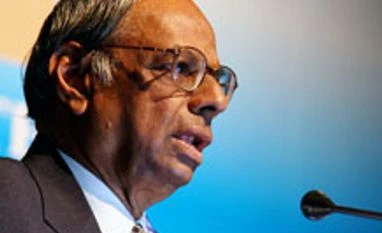
PMEAC Chairman C Rangarajan said Icor had soared to 5.4-11.4 during 2011-12 and 2012-13, depending on how the ratio was calculated. “It appears investment capital accumulated in projects is not yielding commensurate output,” Rangarajan said, blaming the high Icor, primarily for stalled projects. Many analysts say stalled projects are a result of policy paralysis.
Rangarajan said such projects stretched corporate profitability and balance sheets and eroded business and investment sentiment. “Today, there are several thousand megawatts of coal- and gas-based power plants that are not able to use a large part of their capacity because of the lack of fuel, in a situation where there is shortage of power. Likewise, delays in commissioning projects are exacting their price in the form of lower productivity of capital, reflected in the rising ICOR and consequently, lower current output,” he said.
The council said the government should do more in the coming months to clear stalled projects so that new investments could be facilitated.
PMEAC said the government should take measures to reduce CAD. “It is also vitally necessary to encourage exports of both merchandise and services.” The import of coal had also widened CAD, the council said and recommended facilitating a rise in domestic coal production.
It said the government should encourage capital inflows to ensure CAD was comfortably financed. It also favoured making financial products more attractive to channelise savings and dampen gold imports further. “Over the past few years, there have been serious setbacks in the distribution of savings products, especially mutual funds and life insurance,” it said.
PMEAC also asked the government to take measures to tackle inflation, particularly inflation for unprocessed food items. It also sought reforms in agriculture marketing and supply chains, something that fell in the domain of states.

 "Inefficient use of capital behind low growth: PMEAC")


 Connect with us on WhatsApp