T V NARENDRAN, president of industry chamber Confederation of Indian Industry (CII) and Tata Steel chief executive officer and managing director, believes that greater emphasis on skilling will help in improving employment in the country. In conversation with Arup Roychoudhury, Narendran says that capex will pick up, especially in sectors like mining, logistics, and new energy. Edited excerpts:
What is your assessment of the economy and the corporate sector in 2022-23 (FY23)?
It’s a very dynamic environment. As corporates, we need to build resilience and agility into the way we work. Whether it was the Covid-19 pandemic or the Russia-Ukraine war, these are global events we have no control over, but have an impact nonetheless.
But the sentiment is still positive. At CII, we have toned the growth forecast somewhat. We originally felt FY23 gross domestic product growth will be 8.5-9.5 per cent. We now see it at 7.5-8 per cent. That still makes us the fastest-growing large economy.
The No. 1 concern is commodity prices and inflationary costs. Overall, around 70 per cent of our members are saying that they will spend more on capex this year and will hire more people than they did in the past. There is turbulence, but nothing that will derail the growth trajectory significantly.
Inflation is a big concern. How will corporates deal with higher input costs?
At least some of the input cost increase will be passed on to customers. Many corporates are also looking to see if export markets can absorb some of the inflationary pressures in the event a domestic market cannot. There will be some margin compression, but that doesn’t translate into losses.
Corporates are looking at inflation with some concern about input costs. Inflation is helping some companies along the way. High commodity prices are actually encouraging companies in the commodity space to invest more, so that they can grow their capacity.
If you are a farmer growing wheat, inflation is actually helping you. There will be some sectors that will benefit from the higher prices, some not so. But with the government’s focus on infrastructure spending, supply-chain issues will get ironed out, demand-side will be strong.
With more incomes going into the rural economy because of higher food prices, consumption which was fragile will recover. With contact sectors like hospitality and tourism coming back, we see household incomes stabilising.
Will a hit on margins due to inflation impact private-sector capex just as it is picking up?
The sectors that announced their capex programme will continue to spend. In sectors like metal and mining, whatever capex was announced six months ago, more will be done today. Other sectors that announced capex include chemical, where India’s exports have been very strong. Then there is electronics manufacturing — more because of production-linked incentive (PLI) and the domestic market. Supply chain and logistics are very strong because of e-commerce companies. There are newer areas like climate economy and renewable energy.
What about private-sector capex in traditional infrastructure like roads, railways, and ports?
In these sectors, the government spending itself is acting as a trigger for many sectors. If you see airport privatization and ports, a lot of investment is happening because volumes are going up. So that investment continues. I think the expectation or the ambition is to tap into overseas capital.
While the employment situation is better than 2020, it is still a problem. Millions are reportedly leaving the job market.
I think the situation has been tough for many, like migrant workers and women. If you look at that data, employment in agriculture has gone up. This is not default employment but because agriculture has had strong growth. One area for us to work on is skilling. While we are obsessed with education, I think there needs to be a greater obsession with skilling.
More sector-specific skilling work needs to be done by the government. More importantly, the private sector also needs to do more. We should be willing to pay more for skilled people. Unless you pay a premium for good skills, qualified people, there’s no motivation to get those qualifications or get that training.
We need to work through our contractors to drive that ecosystem. That’s an important part of the solution to the job problem, because you constantly hear from our members that we are not getting enough people, while there are millions unemployed. To bridge that talent gap, the private sector and the government need to work together.
According to your assessment, how have the PLI schemes done so far?
It has been a good beginning. For different sectors, it has evolved differently. The biggest story is, of course, electronics and manufacturing. Hopefully, semiconductor manufacturing will pick up. We also need to focus more on labour-intensive manufacturing sectors and I am happy that the textile sector has also got a PLI scheme. Now that we have 13/15 sectors under PLI, the focus should be on execution.
We have had reports of simmering communal tension throughout the country. Can India Inc remain insulated from it for long?
A strife is never good for any business.

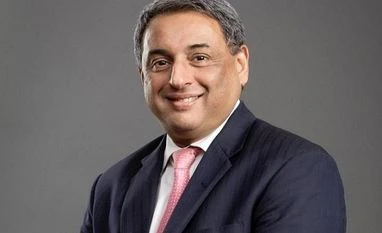 "Inflation is No.1 concern for India Inc: CII president T V Narendran")












