The fact that large amounts of money were invested in developing captive coal blocks is no defence if these were illegally allocated, the Supreme Court informed the government on Wednesday.
Attorney-General G E Vahanvati had said at least Rs 2 lakh crore had been so invested by the private companies in question. Bad luck for them, the three-judge bench, headed by R M Lodha, told him.
“They (companies) must suffer consequences, no matter how much investment has been made by them. The alleged illegality cannot be compounded; now law would help them,” the judges said.
Investments made in anticipation of clearances cannot be justified; such blocks cannot be protected if the companies failed to get clearances within a time frame fixed under the law. “Such investments are made at their own risk if their rights have not matured. All such investments would be unauthorised,” the bench said. The court told the government if the controversial allocations were cancelled by it, the court would not go into the legality of allocations. Tell us if you are going to do so, the bench asked the AG.
An industry representative said, on condition of anonymity, that cancellation of the blocks could throw the power sector back by 10-15 years. “Rs 2,34,000 crore has been invested in blocks and their end-use projects. Allocating blocks again after their cancellations would take at least 10-15 years,” he said.
| ON THE BLACK TRAIL |
- Jun 1993: Coal Mines (Nationalisation) Amendment Act passed to allow captive mining
- Between 1993 and 2009: Govt allocates 210 coal blocks to private and public sector companies for captive consumption
- Jun 1, 2012: CBI registers preliminary inquiry into coal block allocations between 2006 and 2009
- Aug 17, 2012: CAG alleges government extended undue gains to companies by not auctioning 57 blocks allocated between 2006 and 2011
- Aug 27, 2012: PM tells Parliament CAG’s assessment of Rs 1.86-lakh-crore loss to exchequer through allocation of blocks not justified
- Sep 2012: CBI begins grilling in alleged coal scam after CVC forwards complaints; raids are conducts and FIRs filed
- Jun 2013: FIR against JSPL Chairman Naveen Jindal; former MoS for coal Dasari Narayan Rao also named accused
- Sep 2013: Fresh preliminary inquiries registered by CBI into the missing coal files for allocations made from 1993 to 2009
- Oct 15, 2013: CBI registers FIR against industrialist K M Birla and P C Parekh, former coal secretary
- Jan 8, 2014: Supreme Court says huge investment made by companies in coal blocks without getting clearance not grounds for not cancelling licences; asks the Centre to clarify if it intends to de-allocate such allocations
|
Coal mining is an exclusive domain of the public sector in India. The private sector is allowed to mine coal only for captive use in power, steel, cement and sponge iron plants. The government has allocated 218 captive blocks since 1993. About 50 of these have been cancelled over the past two years on grounds of delay.
“The decision to give clearances is taken by the central and state governments. The parties that have been allocated coal blocks can only initiate action for getting clearances. If allottees have taken action but clearances have still not been given, the responsibility lies with the central and state governments. The fault will be of the allottee only if action has not been initiated,” said the Confederation of Indian Industry in a statement.
The SC’s poser to the government is highly relevant for another reason — the state governments concerned are arguing they’d little to do with the allocations. It was primarily the Centre which decided, they have contended.
While, for the central government, the AG has said its role was to only identify the blocks; the remaining onus was with the states. The coal-rich states’ affidavits invariably follow the ask-the-Centre argument and their oral contentions are along the same line. At Wednesday’s hearing, counsels spoke for the governments of Andhra Pradesh, Maharashtra and Madhya Pradesh; MP’s counsel will continue on Thursday. Some of the other states concerned had spoke earlier. West Bengal, Jharkhand, Odisha and Chhattisgarh have also said their own roles were minimal. The court wanted to hear the states individually because it found they and the Centre took opposing views on the allocations, based on the coal nationalisation law and other central laws governing minerals.
On Wednesday, Maharashtra told the bench it was following the “top-down model” recognised for decades since the nationalisation of coal mines. “The Centre has the preponderant role and states are only participants,” state counsel Vivek Thanka told the bench. “The allocations are sent to the states by the Centre and the terms and conditions are binding on us.”
New FIRs
In a related development, the Central Bureau of Investigation (CBI) has registered two more cases for criminal conspiracy in the allocation scam, against BLA Industries and its managing director, Anup Agarwala, against Castron Technologies and Castron Mining. Agarwala, son of a former MP and a member of Parliament’s standing committee on coal, P K Agarwal, is learnt to own Castron Mining, later demerged to form Castron Technology.
It has conducted raids in Dhanbad, Narsinghpur, Mumbai and Kolkata in connection with this case, apart from Delhi and Bhopal. The case has been registered as part of an inquiry into the allocations made between 1993 and 2005. It is alleged Castron Technology was wrongfully allocated the Brahma Diah coal block in Jharkhand in connivance with some public servants in 1999. CBI’s First Information Report (FIR) alleges the company got the block without any “clear end-use project”.
BLA Industries was allocated the Gotitoria (East) and Gotitoria (West) blocks in June 1996. These are located in the Mahapani coalfield in Madhya Pradesh and possess reserves of a little more than nine million tonnes. CBI’s registered case says it appears BLA was permitted to sell the coal in the open market, against the principle of captive mining. And, that the coal was sold for Rs 100 crore annually by the company. BLA had misrepresented facts by stating that it needed coal for its power plant, which was never started, says CBI. CBI has so far registered 16 FIRs in the scam. It will give a status report in the Supreme Court on Thursday. The agency would inform the apex court of the allocations where no instance of criminality has been found and on retrieval of missing files.

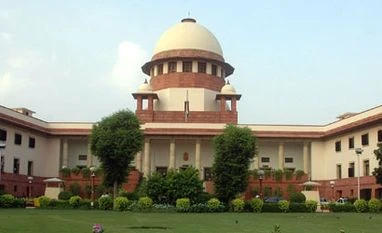 "Investment loss no defence for not cancelling blocks: SC")


 Connect with us on WhatsApp