At a time when political parties are competing with one another to come up with tall promises on impressive farm loan waivers, 13 eminent economists, including former RBI governor Raghuram Rajan and current International Monetary Fund (IMF) Chief Economist Gita Gopinath, have asked the political establishment not to resort to these populist tricks.
A group of these economists, including Abhijit Banerjee, E Somanathan, Amartya Lahiri, Rohini Pande and Karthik Muralidharan, however, endorsed the Telangana model of upfront cash support at the time of sowing — the Rythu Bandhu scheme — to cure farm distress. Telangana is the first and only state to implement the investment support scheme, which hands out Rs 4,000 per acre to land-owning farmers.
If a policy is worth implementing, the government should spend from budgetary resources and not impose the mandate on public sector banks, the former RBI governor stressed.
“I had written to the Election Commission to take this (farm loan waiver promises) off the table,” Rajan recollected, during his tenure as RBI governor.
He said waivers benefitted well-off farmers and put huge fiscal pressures on state finances.
Rajan has ruled out privatisation as a final solution to banking woes. Somewhat contrary to these views, Deputy Governor Viral Acharya had pressed for privatisation in a board meeting of the central bank a few months ago.
To revive stalled projects, a functional out-of-court restructuring process is essential to the Insolvency and Bankruptcy Code (IBC), he said.
The National Company Law Tribunal (NCLT) should act only as a last resort, he said.
He emphasised that members on bank boards should be appointed by professionals rather than the government, and the recommendations of the PJ Nayak committee be taken more seriously.
Crises have surfaced in the non-banking financial companies (NBFC) sector in the past few months.
Reiterating that NBFCs should be able to draw money from financial markets, and that their dependence on banks for credit should reduce, Rajan said banks should complement financial markets rather than see them as competition.

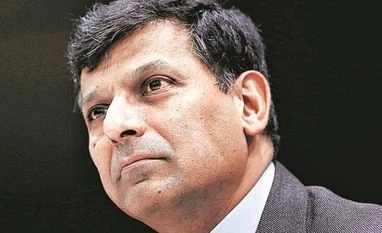 "Keep farm loan waivers out of poll promise: Ex-RBI Governor Raghuram Rajan")












