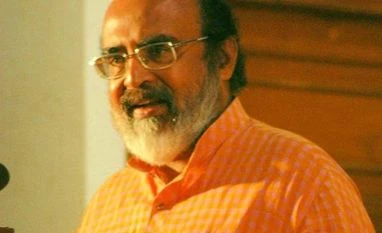
Kerala finance minister T M Thomas Isaac said the state will resist any move to change the current lottery system in the next GST Council meeting.
This comes after the council deferred its decision on tax rates on real estate and lottery till February 24.
In a detailed post in his social media page, Isaac said, “Kerala will fight tooth and nail against any move to change the current lottery system. We are sure that other opposition states will be with us. A fair share of BJP-ruled states, which do not have lottery, will not have any interest on the recommendation. Hence, we can resist this in the next meeting.”
Speaking to Business Standard, he pointed out, “We are expecting at least 11 states to support our stand and I hope that the decision can be made through consensus.” Isaac said no other Congress-ruled state, except Punjab, is running lottery.
And, with support from Congress leaders in Kerala, the state has succeeded in bringing the six states ruled by Congress and four ruled by non-Congress parties together to take a single position on the issue.
However, a sub-committee was formed to discuss the issue. While Kerala, Punjab and West Bengal were part of the sub-committee, it convened a meeting when Isaac was in hospital and the Punjab finance minister was presenting the state budget.
The meeting decided to bring in uniform tax rate for government-run lottery and other lotteries, and private lottery and reduce it from 28 per cent to 18 per cent.
Such a move would help the agents and middlemen to gain momentum in states like Kerala. The GST rate for lottery run by the state government has been fixed at 12 per cent, while the private lottery is at a higher rate, giving an advantage to the state-run lottery. The state has asked the council to hold voting on the issue, which was not possible through video conference, since it needs to be executed through a secret ballot. Besides, Union finance minister Arun Jaitley was of the opinion that things should not go to the extent of voting.
“Substantial issues on which there are differences of opinion should not be decided through video conferences of the GST Council. This was the consensus reached in the first council meeting. Finally good senses prevailed,” Isaac said after the GST meeting on Wednesday.
In Kerala, use of gambling lotteries created huge law and order problems, and the state was successful in eliminating them, Isaac told Business Standard.
“I have been telling all other states to follow the lottery model in Kerala. Punjab is going to go that way and we had a discussion with Maharashtra. I have told the Northeastern states that we can be their agent in Kerala, and probably give more fee than what the mafia pays to use their name,” he said.
Punjab, which does not run lottery through the government machinery, has to pay 28 per cent tax. However, it is getting around Rs 1,000 crore as tax from lottery. Kerala has agreed to provide technical and managerial support to the Punjab government to implement lottery through the government machinery. In fact, a team from Punjab has visited Kerala to study the operations.
Kerala relies on the revenue from lottery for its social welfare programmes. In 2014-15, the state lottery turnover was Rs 5,441.84 crore which went up to Rs 9,021.36 crore in 2017-18. In 2019-20, the lottery turnover will raise around Rs 11,863 crore, according to the state Budget 2019-20.
“We have been able to attain this in lottery sale by strictly defending undesirable trends and preventing the entry of other states’ lotteries. The state government has taken a stand to impose GST at a higher rate on lotteries being conducted by middlemen,” said Isaac during the Budget presentation.
On the recommendations of the real estate tax rates in the upcoming GST Council meeting, he expects that there would be a consensus. However, he said that Kerala’s position is that there are certain issues with the tax structure, such as breaking of the GST chain and questions on the appropriate rate, which will be discussed and decided.

 "Kerala to block move to alter lottery tax system in next GST Council meet")











