Low incentive could dampen interest in PLI scheme for solar manufacturing

The Union Cabinet last month approved the MNRE proposal for ramping up domestic manufacturing of solar photovoltaic panels under the Centre's PLI scheme
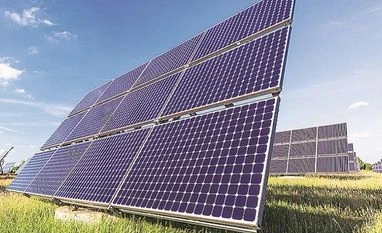
Solar power, Solar energy
The scheme aims to support end-to-end indigenous solar power capacity in the country
Shreya Jai New Delhi
4 min read Last Updated : May 03 2021 | 10:36 AM IST
The Rs 4,500-crore Performance Linked Incentive (PLI) scheme for solar manufacturing has not met industry expectations since domestic manufacturers could end up getting barely 3-5 per cent of the sale value of their solar cells and modules through this scheme. 

With the government claiming record clean energy capacity of 450 GW by 2030, the scheme aims to support end-to-end indigenous solar power capacity in the country. “Industry calculations indicate that in terms of capital expenditure, PLI would be in the range of 15-25 per cent. The incentive on the capex will come after five years. The incentive on sale is variable as no one knows how much they will sell. For foreign investors, the incentive is further reduced due to customs duty,” said a senior executive of a leading solar company.

The Union Cabinet last month approved the proposal of Ministry of New and Renewable Energy (MNRE) for ramping up domestic manufacturing of solar photovoltaic (PV) panels under the Centre's PLI scheme. The proposed scheme is aimed at creating an additional 10,000 MW capacity of integrated solar PV manufacturing plants in the country.

According to the guidelines issued by MNRE, the manufacturers will be selected through a transparent competitive bidding process and PLI will be disbursed for five years post the commissioning of the manufacturing plants, on sales of high efficiency solar PV modules.

DAM Capital in a recent note estimated that the capital required for 1GW of cell and module is expected to be Rs 1,500 crore per GW and the scheme could see 8-10 GW of solar cell and module manufacturing capacity addition in the country.

“Prima facie, based on the guidelines, we believe the scheme is highly beneficial to large players with experience. Note that Adani Enterprises and Tata Power have 1.1GW and 0.4GW of solar cell and module manufacturing capacity. We also expect Coal India and BHEL to participate in the auction among the listed entities,” said the note, adding further that domestic manufacturers would get additional support from basic customs duty on solar imports.

The Centre has announced the imposition of a 40 per cent basic customs duty (BCD) on imported solar cells and modules from April 2022 onwards in order to support domestic solar manufacturing. Nearly 85 per cent of Indian solar capacity is built on imported cells and modules, mainly sourced from China.

“BCD offers much better incentive to a foreign player to come and manufacture in India, rather than PLI. Under PLI, the incentive is very less compared to their capex. For large scale manufacturers, neither the PLI scheme is beneficial nor BCD. Established solar component makers are based SEZ and the Centre till yet has not offered any BCD exemption to them,” said a senior industry executive.

Leading players such as Adani Solar, Vikram Solar, and Waaree Energy are situated in ‘special economic zones’ (SEZs) and thereby come under the duty regime. SEZ manufacturing units are considered t par with foreign companies and hence customs duty is imposed on them too. According to industry data, of the 3,100 MW of cell manufacturing capacity in India, 2,000 MW is situated in SEZs. In module manufacturing, 3,800 MW out of the 9000 MW is located inside SEZs.

PLI as Percentage of Modules Cost and as Percentage of Capex
Type of Manufacturing PLI as % of Module Cost Estimated Capital Cost per GW (Rs Cr) PLI as % of Capex
Cell + Module around 3.5% 850 around 24.5%
Wafer + Cell + Module around 4.6% 1400 around 20%
Polysilicon + Wafer +Cell + Module around 5.75% 2200 around 16%
Note:
  • Base PLI Rate= Rs 3.00/Watt (at Module Efficiency of more than 21.5% and upto 23%,and Temperature coefficient of (-0.4 to -0.3).
  • Price of a Module has been taken as Rs 20/Watt-peak.
SOURCE: MNRE guidelines for PLI scheme, industry calculations

One subscription. Two world-class reads.

Already subscribed? Log in

Subscribe to read the full story →
*Subscribe to Business Standard digital and get complimentary access to The New York Times

Smart Quarterly

₹900

3 Months

₹300/Month

SAVE 25%

Smart Essential

₹2,700

1 Year

₹225/Month

SAVE 46%
*Complimentary New York Times access for the 2nd year will be given after 12 months

Super Saver

₹3,900

2 Years

₹162/Month

Subscribe

Renews automatically, cancel anytime

Here’s what’s included in our digital subscription plans

Exclusive premium stories online

  • Over 30 premium stories daily, handpicked by our editors

Complimentary Access to The New York Times

  • News, Games, Cooking, Audio, Wirecutter & The Athletic

Business Standard Epaper

  • Digital replica of our daily newspaper — with options to read, save, and share

Curated Newsletters

  • Insights on markets, finance, politics, tech, and more delivered to your inbox

Market Analysis & Investment Insights

  • In-depth market analysis & insights with access to The Smart Investor

Archives

  • Repository of articles and publications dating back to 1997

Ad-free Reading

  • Uninterrupted reading experience with no advertisements

Seamless Access Across All Devices

  • Access Business Standard across devices — mobile, tablet, or PC, via web or app

Topics :PLI schemesolar power

Next Story



