A few weeks ago, in a press event, representatives of flour millers’ associations expressed the hope that softening wheat flour (atta) prices in consumer markets would start getting reflected in consumer price index (CPI) numbers from March onwards, and that could provide relief to the government, which is battling high prices.
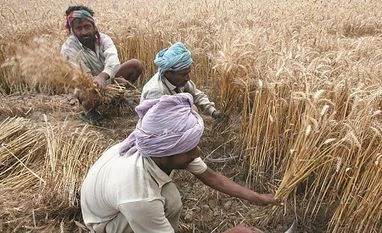
However, the recent rain in major wheat-growing areas could put paid to their hopes. The data shows between March 11 and March 23, when the unseasonal downpour started stampeding wheat crops in Madhya Pradesh, Uttar Pradesh, Punjab, and Haryana, prices of good-quality wheat rose around Rs 50 per quintal while what was damaged was fetching a price that in some cases was lower than the minimum support price (MSP).
“In Madhya Pradesh and Gujarat, hailstorm has caused lodging in wheat, which could result in 3-4 per cent yield loss. The damage to wheat, paddy, cumin, onion, tomato and mango would impact their prices,” CRISIL Ratings said in a research report.
In the Indore mandi, the trade data shows wheat prices were Rs 1,800-2,400 per quintal on March 11 (the band reflecting the quality), rising to Rs 1,850-2,450 on March 23. Similarly, in the Kota mandi of Rajasthan, wheat was trading at Rs 2,050-2,500 on March 11, rising to Rs 1,950-3,000 on March 23.
Meanwhile, the inflation data showed in February 2023 (for which the latest data is there) while inflation in wheat on the wholesale price index dropped to 18.54 per cent from 23.63 per cent in January, the metric on the CPI (which comprises atta) for the same month rose from 25.05 per cent in January to 25.37 per cent in February.
This shows though wheat prices might have dropped in wholesale markets, the fall has not been transmitted to consumer level.
Falling wheat prices just before the rain happened had driven farmers to despair with rates dropping below the MSP of Rs 2,125 per quintal in several markets of Madhya Pradesh and Gujarat. This was just when procurement started, leaving official agencies as the sole buyers.
Heavy rain and hailstorm lead to deterioration in the quality of wheat grains, which fetch lower prices in the market.
A big reason for the drop in prices is the Centre’s decision to pump in almost 5 million tonnes from its inventories through open market sales to cool wheat and atta prices.
So far, of the 5 million tonnes, around 3.8 million tonnes has been bought by millers and traders.
Most traders and market watchers say prices of wheat will remain bearish owing to the bumper harvest and excessive supplies in the market, aided by a liquidation of government stocks. But weather patterns will be a key determinant.
“Wheat prices are in a strong bearish trend, having the possibility of falling below Rs 2,050 per quintal on higher production (108-110 million tonnes), increasing arrivals, and higher global production by 5.15 million tonnes. Sales through the open market keep the demand-supply equilibrium balanced in recent months, leading to an 18 per cent correction this year. CBOT (Chicago Board of Trade) wheat prices have also pared their losses from a 16-month low of $672 per tonne,” Tarun Satsangi, assistant general manager (commodity research), Origo Commodities, told Business Standard.
Rahul Chauhan, commodity analyst at iGrain India, said due to unseasonal rain, the crop in MP, Rajasthan, Punjab, Uttar Pradesh and Haryana had been affected. In central India crops were being harvested and they have been impacted, which will affect their seed quality.
“Whatever wheat comes to the market will be sold quickly and prices may trend above or near the MSP. However, prices of URS wheat, which is ‘Under Relaxed Conditions’ or of not such a good quality, will trade lower than the MSP,” Chauhan told Business Standard.