MGNREGA allocation: Provision and demand not in sync, say experts

FM had allocated Rs 73,000 crore towards MGNREGA in last year's Budget, which has been revised to Rs 98,000 crore on account of higher demand for the work
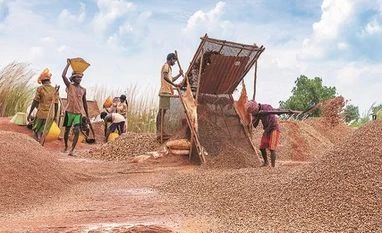
MGNREGA
The allocation was Rs 1.1 trillion in FY21. For the financial year 2022-23, the allocation has been slashed by a fourth
Shreya Nandi New Delhi
2 min read Last Updated : Feb 08 2022 | 12:56 AM IST
With the Centre increasing the allocation in the revised estimate for the current fiscal towards the flagship rural job scheme Mahatma Gandhi National Rural Em­pl­oyment Guara­ntee Progra­mme, an expert said the allocation does not match with the overall demand of the scheme on ground.

“Though we saw an increase in allocation of NREGA, if you compare bud­geted estimates with revised estimates, as on February 1, 7.7 million household wanted work from NREGA have not been able to access work is telling you that budgetary allocation at this point of time don't match the overall demand for the scheme on ground,” Yamini Aiyer, president and chief executive of Centre for Policy Research said at Indian Council for Research on International Economic Relations’ (ICRI­ER’s)16th 5-Institute Budget Seminar 2022: Unpacking the Union Budget 2022-23, held on Monday.

Finance minister Nirmala Sith­araman had allocated Rs 73,000 crore towards MGNREGA in last year’s Budget, which has been revised to Rs 98,000 crore on account of higher demand for the work. The allocation was Rs 1.1 trillion in FY21. For the financial year 2022-23, the allocation has been slashed by a fourth. Deepak Mishra, director and chief executive of ICRIER, said in the Budget, the finance minister has infused a set of new vocabulary to the post budget discourse and strengthened the foundation of a new economy in India. However, he said that as far as trade policy is concerned, it is a mixed bag.

According to Poonam Gupta, Director General National Council of Applied Economic Research (NCAER), who was also a part of the virtual event, the thrust of the Budget was restoring and accelerating growth.

“While at one level, the Budget was supporting growth, it was mindful of the fact that macroeconomic stability needs to be restored. So, there is nominalisation of fiscal policy, which means that revenue expenditure is being taken back to pre-pandemic level and here the assumption is that the worst is behind us and that perhaps there will be no new waves, and if at all they will be of shorter duration and less disruptive,” Gupta said.

One subscription. Two world-class reads.

Already subscribed? Log in

Subscribe to read the full story →
*Subscribe to Business Standard digital and get complimentary access to The New York Times

Smart Quarterly

₹900

3 Months

₹300/Month

SAVE 25%

Smart Essential

₹2,700

1 Year

₹225/Month

SAVE 46%
*Complimentary New York Times access for the 2nd year will be given after 12 months

Super Saver

₹3,900

2 Years

₹162/Month

Subscribe

Renews automatically, cancel anytime

Here’s what’s included in our digital subscription plans

Exclusive premium stories online

  • Over 30 premium stories daily, handpicked by our editors

Complimentary Access to The New York Times

  • News, Games, Cooking, Audio, Wirecutter & The Athletic

Business Standard Epaper

  • Digital replica of our daily newspaper — with options to read, save, and share

Curated Newsletters

  • Insights on markets, finance, politics, tech, and more delivered to your inbox

Market Analysis & Investment Insights

  • In-depth market analysis & insights with access to The Smart Investor

Archives

  • Repository of articles and publications dating back to 1997

Ad-free Reading

  • Uninterrupted reading experience with no advertisements

Seamless Access Across All Devices

  • Access Business Standard across devices — mobile, tablet, or PC, via web or app

Topics :MGNREGABudget 2022MGNREGA funds

Next Story



