Midnight truce: Petrol pumps to accept debit and credit cards till Jan 13

Four banks had said that they would levy a charge on card usage
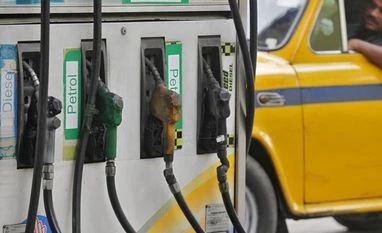
Photo: Reuters
A driver waits in a taxi for his turn to fill up his tank with diesel at a fuel station in Kolkata. Photo: Reuters
Shine JacobPTI New Delhi
Last Updated : Jan 09 2017 | 9:11 AM IST
Petrol-pump owners on Sunday night deferred till January 13 their decision to not accept credit- and debit-card payments for fuel sales, after banks put off the move to levy a charge on every plastic transaction. 

The roll-back was announced within hours of petrol-pump associations saying they would not accept card payments from Monday. The decision covers a majority of the 56,000 outlets in the country. The four banks that had said they would levy a charge on card usage at fuel pumps are HDFC Bank, Axis Bank, ICICI Bank and Punjab National Bank.

A D Sathyanarayan, president of the Consortium of India Petroleum Dealers, had earlier told this newspaper: “We have been informed by these four banks that we will be charged one per cent on all credit card transactions and between 0.25 per cent and one per cent on all debit card transactions from January 9. Reports suggest even State Bank of India is planning to charge the same. We feel banks are using this as an excuse to improve their bottom line through transactions at fuel stations. Hence, we have decided not to accept any card transactions from Monday.”

The association claims to have about 25,000 motor fuel outlets as members. Later, the All India Petroleum Dealers’ Association stated the same. Its members’ margins, it said, were fixed on a per kilolitre (kl) basis and there was no scope to absorb the new charges. Dealers say a one per cent charge would mean 30 per cent of the gross dealer margin on petrol and 40 per cent on diesel. “Our margins will be wiped out if we accept this. We have specific mechanisms to compute the margin and these do not have any scope for credit card merchant discount rates,” Sathyanarayan added. 

As of last March, there were 56,190 fuel retail outlets. Of these, those of the three government-owned majors — Indian Oil Corporation, Bharat Petroleum Corporation and Hindustan Petroleum Corporation — added to 52,604 retail outlets. The private sector ones are Shell, Reliance and Essar Oil. The monthly consumption of each outlet averages to 170 kl. “This decision is only for those banks that have levied this charge. Dealers in our association using POS (point-of-sale) machines of other banks can accept card payments,” said Ajay Bansal, president of the All India Petroleum Dealers’ Association.

One subscription. Two world-class reads.

Already subscribed? Log in

Subscribe to read the full story →
*Subscribe to Business Standard digital and get complimentary access to The New York Times

Smart Quarterly

₹900

3 Months

₹300/Month

SAVE 25%

Smart Essential

₹2,700

1 Year

₹225/Month

SAVE 46%
*Complimentary New York Times access for the 2nd year will be given after 12 months

Super Saver

₹3,900

2 Years

₹162/Month

Subscribe

Renews automatically, cancel anytime

Here’s what’s included in our digital subscription plans

Exclusive premium stories online

  • Over 30 premium stories daily, handpicked by our editors

Complimentary Access to The New York Times

  • News, Games, Cooking, Audio, Wirecutter & The Athletic

Business Standard Epaper

  • Digital replica of our daily newspaper — with options to read, save, and share

Curated Newsletters

  • Insights on markets, finance, politics, tech, and more delivered to your inbox

Market Analysis & Investment Insights

  • In-depth market analysis & insights with access to The Smart Investor

Archives

  • Repository of articles and publications dating back to 1997

Ad-free Reading

  • Uninterrupted reading experience with no advertisements

Seamless Access Across All Devices

  • Access Business Standard across devices — mobile, tablet, or PC, via web or app

Next Story



