The central government will launch a campaign covering over 250,000 gram panchayats across the country on October 2.
Christened ‘Sabki Yojana, Sabka Vikas’, the campaign will involve people at the grassroots while preparing structured gram panchayat development plans, along with a thorough audit of the works done in the last few years.
The mega campaign, to start on Mahatma Gandhi's birth anniversary, will be conducted just before the elections in three major BJP-ruled states and also before the 2019 general elections.
Under the campaign, which will conclude in December, all gram panchayats in the country will have to put up a notice board detailing the work done by it in the last few years, funds received from various sources, details of their allocation and also what developmental activities it plans to undertake in the 2018-19 financial year.
Gram sabha meetings will be made mandatory where trained assistants related to all 29 sectors assigned to gram panchayats, according to the 11th schedule of the constitution, will have to be present. The sectors include agriculture, rural housing, drinking water, poverty alleviation programmes, social welfare, cultural activities, market and fairs, etc.
“If used properly, gram panchayats can become micro-models of development as funds are not a constraint after the 14th Finance Commission (FFC) devolutions,” the official said.
After FFC recommendations are implemented, an average big-sized gram panchayat will have an annual budget of close to Rs 50 million. “If this is judiciously used, a lot of good tangible development work can be done,” the official added.
The development plan of each gram panchayat will have to be shared with the Centre after the campaign is over. Letters are being sent to all state chief secretaries and others to kickstart the programme.
The programme comes months after the Centre concluded an intensive Gram Swaraj Abhiyan in two-phases to ensure universal coverage and 100 per cent penetration of seven major schemes — Pradhan Mantri Ujjawala Yojana (for gas connections), Saubhagya (household electricity connections), Ujala (distribution of LED bulbs), Pradhan Mantri Jan Dhan Yojana (no-frill bank accounts), Pradhan Mantri Jeevan Jyoti Yojana (life insurance cover), Pradhan Mantri Suraksha Bima Yojana (insurance scheme) and Mission Indradhanush (immunization programme).
The programme was carried out in about 64,000 villages in two phases starting in April this year.
Of these, priority was given to those villages with higher SC/ST population and 117 identified aspirational districts which are at the bottom of the social and economic indicators.
Government officials claim that during the two-phased campaign, among other things, about 4.77 million new LPG gas connections were given, 3 million household electricity connections were given, 6.5 5 million LED bulbs were distributed, 7.35 million new Jan Dhan accounts were opened, about 5.04 million beneficiaries were enrolled in life insurance schemes.

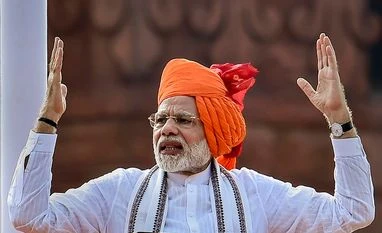 "Modi govt set to roll out 'Sabki Yojana, Sabka Vikas' campaign on October 2")











