Monetising part of fiscal deficit inevitable: ex-RBI governors and experts

Monetising deficit means that the RBI purchases govt bonds directly in the primary market and finances this debt by printing more currency
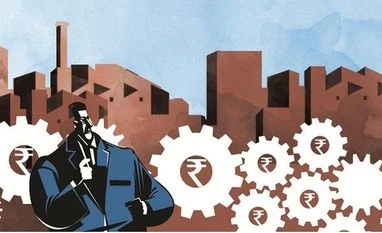
fiscal deficit, economy, illustration
Rangarajan suggested that the government can front-load the borrowing.
Indivjal Dhasmana New Delhi
4 min read Last Updated : Apr 16 2020 | 11:10 PM IST
Former governors of the Reserve Bank of India and other experts believe that the central bank will have to partly monetise the government’s fiscal deficit, which is likely to balloon as it battles the impact of the coronavirus disease (Covid-19). They feel this wouldn’t have much of an inflationary impact in the current situation.
 
Monetising deficit refers to the exercise of RBI purchasing government bonds directly in the primary market and financing this debt by printing more money.
 
Former RBI governor C Rangarajan said with expenditures increasing and revenues falling, there was a need for greater borrowing by the government. “Some part of it will have to be monetised,” he said.
 
He suggested that the government could front-load the borrowing. “It can borrow the bulk for FY21   in the first quarter or first half. And as expenditure increases, it will have to borrow more. Some part of the support will have to come from the RBI. Some monetisation of the debt is inevitable,” he said.
 
The government decided to borrow Rs 4.88 trillion in the first half of FY21 or 62.56 per cent of total borrowing of Rs 7.8 trillion for the entire year. The government had borrowed 62.56 per cent of total budgeted borrowing in the first half of FY20, too.

It was in 1997, when Rangarajan was the RBI governor, that the policy of automatically monetising the government’s fiscal deficit was done away with. He said the method that was followed at that time led to monetisation of the deficit without limit. At the time, the fiscal deficit was automatically monetised through the issue of special securities called ad-hoc Treasury Bills, issued by the RBI on behalf of the Centre to itself at a fixed rate. However, now the government and RBI can come to an understanding on the extent of monetisation of the deficit, Rangarajan said.

“The borrowing for which there are no takers in the market could find support from RBI directly through the primary market or indirectly through secondary market,” he said The government had through the Finance Act 2017 enabled the RBI to participate in the primary bond markets to monetise fiscal deficit of the Centre under certain conditions.
Bimal Jalan, who succeeded Rangarajan as RBI governor in November 1997, said, “At the moment we should do whatever we can to provide resources to keep the growth rate at the minimum declining level, increase jobs, raise demand and availability of goods and services. It is key to look at the current situation this way, rather than saying I won’t do this or that”. He said this should be the way ahead even if it means resorting to monetising the deficit.
 
To a query on whether the measure wouldn’t be inflationary, he said, “Where would inflation increase from when there is no demand and employment? Even if inflation increases by 0.5 percentage points, it does not matter because our inflation rate is low,” he said.
 
Former chief statistician Pronab Sen said the fact was that the government’s tax revenues were severely affected, so increasing expenditure necessitated printing more money. “There is no other option,” he said.

On inflation, he said this was no time to worry about it. “Yes, it will be inflationary if too much money is put into the system right away, so it has to be gradual. At the moment, if the government does not do anything, the economy continues to go into tail spin. But the nature of intervention has to be sequential, it should not be all at once,” he suggested.
 
Devendra Pant, chief economist at India Ratings, said the option of monetising deficit was available to the government. “Whether RBI monetises deficit or not depends on the government’s plan of actions. But monetising deficit is an option,” he said. Madan Sabnavis, chief economist of CARE Ratings,  said the RBI didn’t have to go in for monetisation. It had the indirect route, which it had exercised. “It will continue to do that. It has OMOs, LTRO, repo to lend money to banks to subscribe to government bonds. It may not come to primary markets directly.”
 

One subscription. Two world-class reads.

Already subscribed? Log in

Subscribe to read the full story →
*Subscribe to Business Standard digital and get complimentary access to The New York Times

Smart Quarterly

₹900

3 Months

₹300/Month

SAVE 25%

Smart Essential

₹2,700

1 Year

₹225/Month

SAVE 46%
*Complimentary New York Times access for the 2nd year will be given after 12 months

Super Saver

₹3,900

2 Years

₹162/Month

Subscribe

Renews automatically, cancel anytime

Here’s what’s included in our digital subscription plans

Exclusive premium stories online

  • Over 30 premium stories daily, handpicked by our editors

Complimentary Access to The New York Times

  • News, Games, Cooking, Audio, Wirecutter & The Athletic

Business Standard Epaper

  • Digital replica of our daily newspaper — with options to read, save, and share

Curated Newsletters

  • Insights on markets, finance, politics, tech, and more delivered to your inbox

Market Analysis & Investment Insights

  • In-depth market analysis & insights with access to The Smart Investor

Archives

  • Repository of articles and publications dating back to 1997

Ad-free Reading

  • Uninterrupted reading experience with no advertisements

Seamless Access Across All Devices

  • Access Business Standard across devices — mobile, tablet, or PC, via web or app

Topics :Fiscal DeficitReserve Bank of IndiaRBI Governor

Next Story


