New recipe to check food inflation
Agriculture Minister Radha Mohan Singh said whenever BJP came to power, prices of essential commodities saw a fall
BS Reporter New Delhi The new government’s food, consumer affairs and agriculture ministries on Tuesday said reducing food prices was their priority.
For the recent Lok Sabha elections, addressing food inflation was one of the primary poll planks of the Bharatiya Janata Party (BJP).
On Tuesday, Food Minister Ram Vilas Paswan said his primary objectives were containing the rise in the prices of food items, improving the public distribution system (PDS) and creating adequate storage capacity for foodgrains.
Agriculture Minister Radha Mohan Singh said whenever the BJP came to power, the prices of essential commodities saw a fall. This time would be no different, he added.
Mohan, who will formally take charge on Wednesday, also said his other priority will be to empower farmers.
Raosaheb Dadarao Danve, minister of state for consumer affairs, said he would crack down on those who hoarded food commodities and created artificial shortage. “I can work 18-20 hours a day…I will fulfil Modiji’s dream,” he said.
While Paswan and Danve assumed charge of their offices on Tuesday, Singh will do so on Wednesday.
“In the next week, I will discuss important issues such as PDS, FCI (Food Corporation of India) godowns and minimum support prices (MSP) for farmers with the food and consumer affairs secretaries and, subsequently, decide the priorities,” Paswan said. He added his ministry would work to provide benefits to farmers and the public at large. “My priority will be to correct the deficiencies in PDS. We will strengthen the PDS,” he said.
Grains purchased by the government shouldn’t be allowed to “rot”, the minister said, adding to address this, the Centre would create adequate storage space.
“Our government’s priority will be to check price rise and corruption,” he said, adding he would work in coordination with state governments.
According to PTI report, Paswan also expressed concern over the delay in disposal of cases in consumer courts.
While taking charge on Tuesday, he was accompanied by his son Chirag Paswan.
Rao Inderjit Singh, minister of state for planning (independent charge), said during the term of the previous government, poverty had become a major issue, adding he would look into the matter once he assessed the situation.
The poverty line drawn by the previous Planning Commission had drawn much criticism. According to the Commission, those spending more than Rs 27.20 a day in rural areas and Rs 33.33 in urban regions were above the poverty line.

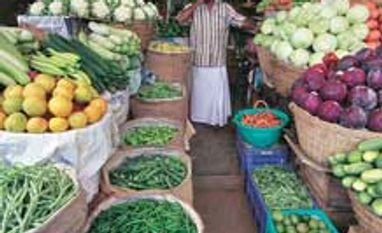 "New recipe to check food inflation")


 Connect with us on WhatsApp