Niti Aayog has plenty to do if only it sets it sails for the future

Aayog could have done plenty is in asking questions about the expanding range of price control
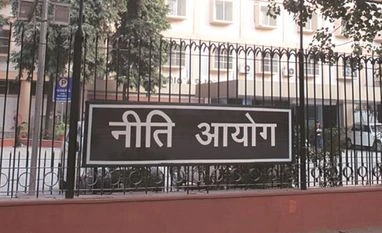
NITI Aayog
The RSS-backed trade union said that NITI Aayog’s proposal to create a new category of “fixed term employment” in the organised sector will destroy quality jobs.
Subhomoy Bhattacharjee
Last Updated : Aug 02 2017 | 12:17 PM IST
A senior finance ministry official said last week, why has Niti Aayog got into public-private-partnership?  That portfolio had clearly traveled to the finance ministry. The official was referring to the renewed enthusiasm within the Aayog to use the model to offer solutions for sectors like health care. It was also reported earlier that the government might dismantle the finance ministry’s public-private partnership committee and ask Niti Aayog to do the work. This came just as the government scrapped the Foreign Investment Promotion Board. 

Essentially the shifting of committee would have made Niti Aayog one more arm of the central government, competing for attention with other ministries. The additional work on disinvestment handed to the Aayog promised to walk the same path. This had become the bane of the erstwhile Planning Commission which had become one more post on the way to secure a cabinet approval for any policy. To the delight of segments of the media it had also become a giant leaking sieve to catch classified government papers.

The significant work done by Niti Aayog since it was set up in January 2015 has been in the field of railway modernisation and in preparing an impressive road map for India’s energy needs stretching upto 2040. The railway work has been steered by member of the Commission, Bibek Debroy—in fact Suresh Prabhu’s first and last railway budget was largely crafted within Niti Aayog. Its plans for reinventing the railways may be far behind the schedule but the plan was developed with the Aayog. Even now the Extended Board of Railways that clears most of the projects for the state owned entity includes Niti Aayog as did the earlier Planning Commission. 

The other seminal work done by the successor to the Commission is in energy. True, the work had begun under Montek Singh Ahluwalia during the tenure of the UPA-II but it has been extended both in terms of timeline (upto 2040) and broadened in scope. The discussions on energy security was anathema to the Planning Commission, but Niti Aayog has dealt with it in detail. The Draft National Energy Policy has a clear agenda and to that extent has a world view. For instance it wants to demerge the seven subsidiaries of Coal India Ltd and get them into competition. These are practical suggestions and it is expected that they will come into  effect soon. The reasons why they sound promising about delivery is because the respective ministries have back stopped these initiatives. 

An area where the Aayog could have done plenty is in asking questions about the expanding range of price controls that different ministries are ringing in from airlines to drug subsidies.

These are undercutting the role of efficient price discovery process and creating a drag on prices. 

Those controls are clearly counter productive and have only left the citizens, worse off. For the upcoming budget the government has so far not asked the Aayog to do any detailed subject crunching. The Aayog has plenty of productive work if only it sets it sails for the future.

One subscription. Two world-class reads.

Already subscribed? Log in

Subscribe to read the full story →
*Subscribe to Business Standard digital and get complimentary access to The New York Times

Smart Quarterly

₹900

3 Months

₹300/Month

SAVE 25%

Smart Essential

₹2,700

1 Year

₹225/Month

SAVE 46%
*Complimentary New York Times access for the 2nd year will be given after 12 months

Super Saver

₹3,900

2 Years

₹162/Month

Subscribe

Renews automatically, cancel anytime

Here’s what’s included in our digital subscription plans

Exclusive premium stories online

  • Over 30 premium stories daily, handpicked by our editors

Complimentary Access to The New York Times

  • News, Games, Cooking, Audio, Wirecutter & The Athletic

Business Standard Epaper

  • Digital replica of our daily newspaper — with options to read, save, and share

Curated Newsletters

  • Insights on markets, finance, politics, tech, and more delivered to your inbox

Market Analysis & Investment Insights

  • In-depth market analysis & insights with access to The Smart Investor

Archives

  • Repository of articles and publications dating back to 1997

Ad-free Reading

  • Uninterrupted reading experience with no advertisements

Seamless Access Across All Devices

  • Access Business Standard across devices — mobile, tablet, or PC, via web or app

Next Story



