Associate Sponsors

Pension bills of states cut into municipal budget in the time of Covid

An RBI analysis showed that during the second wave, 22% of municipalities reported revenue loss of an alarming 50% and more
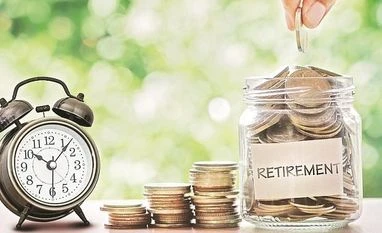
Pension
Representative image
Subhomoy Bhattacharjee New Delhi
5 min read Last Updated : Dec 08 2021 | 5:07 PM IST
More than anything else, each state government in India has become a pension paying organisation. Towering above all expenditures on education, on health and of course on any economic services, the single largest expenditure states incur is on pensions. The biggest impact of this spike could be on the discretionary money the states pay to municipal corporations and panchayats. From vaccination to hospitalisation, these bodies are, however, the bulwark against Covid. 

While the ballooning pension bill also has huge significance for states trying to cut their fiscal deficit and yet reorient their expenditure towards development, as an RBI study on state finance released last week shows, the negative impact on the third tier of government is a cause for the deepest concern. The RBI analysis showed that during the second wave, 22 per cent of them reported revenue loss of an alarming 50 per cent and more.

Pension is the payment states make to their former employees. There is no accurate data of the number of state government employees at any point of time--not with the RBI and certainly with no other government body like the central pay commissions. It is roughly considered three times more than the number of central government staff at 3.4 million. 

As per latest RBI data on state finances, of the total expenditure of all states, pension ate up 11 per cent in FY20, the last pre-Covid year. Of the total non-development expenditure, it was more than a third at 35 per cent, eclipsing even interest payments on loans the states take on. 

In the past two decades, almost all states and union territories have migrated to the New Pension Scheme (NPS) for fresh employees. For these employees, the states shall bear no expenditure to pay their pension. But the pension overhang on the government budgets has risen because the bill will be payable for the older employees. Each state brought in the NPS for its employees at a different time. In Tripura for instance, it kicks in only for those joining in 2018. Uttar Pradesh adopted the scheme much earlier in 2004 but rolled out the requisite notifications only in 2012. 

This is worrying because the same RBI database shows development expenditure of the states has begun to come down over the past few years.  

About fifteen years ago, in FY05, the aggregate development expenditure of the states was just half of their total spend at 51.8 per cent. The states began to repair their finances soon thereafter and in FY09, the year before the meltdown, their development expenditure reached 64.3 per cent. This was an impressive feat, achieved in just four years. Since the total purse of the states had also risen meanwhile they were spending a far larger sum on productive heads. 

The pace of improvement continued, though at a slower pace. By FY17, the percentage of money spent on development had risen to 67.6 per cent. It has however reversed since then and by FY20 has come down to 61.9 per cent.  

The reasons are obvious. In the same period the pace of growth of revenue of the states have slowed down. In FY20 for instance, all the states combined, were in revenue deficit. At the same time their pension liabilities have risen because those are inflation linked and the number of employees retiring from state government services have bulged.  So the space for development expenditure is getting crimped. 

Post Covid, the states are in much weaker financial condition. The 15th Finance Commission has given room to the states to raise their combined fiscal deficit to 4 per cent of the GDP, but by current trends that ceiling will be breached.

State level expenditure data
All states
FY05 FY09 FY17 FY20 Development 51.8 64.3 67.6 61.9
Non-development
33.5 28.9 26.2 28.8 Others* 14.8 6.8 6.2 9.3
Notes
  1. Source: RBI; 
  2. * Includes Grants-in-Aid and Contributions (Compensation and Assignments to Local Bodies), Discharge of Internal Debt and Repayment of Loans to the Centre
  3. All figures in per cent for that year
State level data on development and non-development expenditure
Development Expenditure FY20 (Rs crore) Non-development FY20 (Rs crore)
Education, sports, culture 5,28,937.8 Interest payments 3,58,832.5
Medical 
1,76,974.9 Pension 3,45,505.2 Social security & welfare 1,31,339.3 . . Agriculture & allied  2,09,560.5 , .

Third-tier data (Municipal and panchayats)
(All figures in %) Fall in revenue Rise in expenditure Rise in expenditure (2nd wave)
Less than 20% 46 55 59
20-50% 38 39 30
More than 50% 16 6 11

Third Tier data (Municipal and panchayats)
Decline in revenue
70.4 Increase in expenditure 71.2 Cut down other expenditure  29.6 Delayed or cut back of state support 29.6


One subscription. Two world-class reads.

Already subscribed? Log in

Subscribe to read the full story →
*Subscribe to Business Standard digital and get complimentary access to The New York Times

Smart Quarterly

₹900

3 Months

₹300/Month

SAVE 25%

Smart Essential

₹2,700

1 Year

₹225/Month

SAVE 46%
*Complimentary New York Times access for the 2nd year will be given after 12 months

Super Saver

₹3,900

2 Years

₹162/Month

Subscribe

Renews automatically, cancel anytime

Here’s what’s included in our digital subscription plans

Exclusive premium stories online

  • Over 30 premium stories daily, handpicked by our editors

Complimentary Access to The New York Times

  • News, Games, Cooking, Audio, Wirecutter & The Athletic

Business Standard Epaper

  • Digital replica of our daily newspaper — with options to read, save, and share

Curated Newsletters

  • Insights on markets, finance, politics, tech, and more delivered to your inbox

Market Analysis & Investment Insights

  • In-depth market analysis & insights with access to The Smart Investor

Archives

  • Repository of articles and publications dating back to 1997

Ad-free Reading

  • Uninterrupted reading experience with no advertisements

Seamless Access Across All Devices

  • Access Business Standard across devices — mobile, tablet, or PC, via web or app

Topics :CoronavirusReserve Bank of Indiastate financesState fiscal deficitspensionRBI

Next Story



