Associate Sponsors

Co-sponsor

PHDCCI chief Sanjay Aggarwal wants highest income tax rate cut to 25%

His comment was in contrast to economist Joseph Stiglitz's, who wanted the rich to be taxed more under the current circumstances
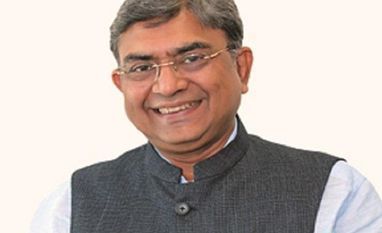
Sanjay Aggarwal
PHD Chamber of Commerce and Industry’s (PHDCCI’s) new president Sanjay Aggarwal
Indivjal Dhasmana New Delhi
2 min read Last Updated : Oct 19 2020 | 1:47 AM IST
PHD Chamber of Commerce and Industry’s (PHDCCI’s) new president Sanjay Aggarwal on Sunday said the next Budget should lower the maximum income tax (I-T) rate to around 25 per cent from the current 30 per cent plus surcharges.
 
“In the current scenario, there is a need to increase the disposable income of people by reforming the direct tax structure. The maximum personal income tax rate should be around 25 per cent to increase the personal disposable income. This will boost demand in the economy,” Aggarwal, who is chairman and chief executive officer (CEO) of Paramount Cables, said.
 
His comment was in contrast to economist Joseph Stiglitz’s, who wanted the rich to be taxed more under the current circumstances.
 
Currently, an annual income of over Rs 10 lakh attracts 30 per cent tax, besides education and health cess of four per cent under the old regime. If an assessee chooses the new scheme of less exemptions, annual income of over Rs 15 lakh attracts 30 per cent tax.  Besides, there are surcharges if annual income is above Rs 50 lakh. These go up to 37 per cent of the tax rate depending upon the amount of income.
 
Aggarwal said focus of the Budget should be on prioritising infrastructure development, inducing flow of investments and creating a conducive as well as attractive business environment for companies looking to shift businesses from other countries to India.
Besides, the Budget should enhance the competitiveness of India’s services & manufacturing sectors and raise expenditure on education and health with a long-term vision of building Atmanirbhar Bharat.
 
“The lockdown restricted the demand for  MSME products. The disruption in supply chain  hit the prices of raw materials, increasing the cost of production. This and lower cost margins impacted MSME cash flows,” he said.
 
Also, as a result of payment delays, businesses, especially MSMEs, have been facing financial hardships and liquidity constraints. This led to severe pressure on their working capital management, Aggarwal pointed out.
 
He said the package announced by the government for MSMEs has benefited them immensely and this should continue.
There should be special efforts to pro-actively implement the Centre’s instructions to PSUs and government departments to urgently release all payments to MSMEs, he added.

One subscription. Two world-class reads.

Already subscribed? Log in

Subscribe to read the full story →
*Subscribe to Business Standard digital and get complimentary access to The New York Times

Smart Quarterly

₹900

3 Months

₹300/Month

SAVE 25%

Smart Essential

₹2,700

1 Year

₹225/Month

SAVE 46%
*Complimentary New York Times access for the 2nd year will be given after 12 months

Super Saver

₹3,900

2 Years

₹162/Month

Subscribe

Renews automatically, cancel anytime

Here’s what’s included in our digital subscription plans

Exclusive premium stories online

  • Over 30 premium stories daily, handpicked by our editors

Complimentary Access to The New York Times

  • News, Games, Cooking, Audio, Wirecutter & The Athletic

Business Standard Epaper

  • Digital replica of our daily newspaper — with options to read, save, and share

Curated Newsletters

  • Insights on markets, finance, politics, tech, and more delivered to your inbox

Market Analysis & Investment Insights

  • In-depth market analysis & insights with access to The Smart Investor

Archives

  • Repository of articles and publications dating back to 1997

Ad-free Reading

  • Uninterrupted reading experience with no advertisements

Seamless Access Across All Devices

  • Access Business Standard across devices — mobile, tablet, or PC, via web or app

Topics :Income taxTax benefits

Next Story


