
Prioritise spending, boost infra, sell PSUs: Raghuram Rajan on Budget
Former RBI Governor Raghuram Rajan says the government should take advantage of the peaks in the Indian equity markets right now and sell stakes in PSUs
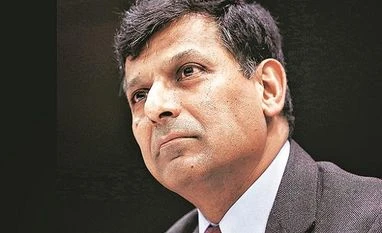 "Prioritise spending, boost infra, sell PSUs: Raghuram Rajan on Budget")
WebinarsNew
Deep DiveNew
Explore Business Standard
Former RBI Governor Raghuram Rajan says the government should take advantage of the peaks in the Indian equity markets right now and sell stakes in PSUs
Former Reserve Bank of India (RBI) Governor Raghuram Rajan says the government should take advantage of the peaks in the Indian equity markets right now and sell stakes in PSUs while prioritising spending to get the economy back on track.
The upcoming Budget for the fiscal year beginning April 1 should look to provide "relief to the poorer households and small and medium enterprises," he said.
And then move on to getting the economy back on track.
"It (the government) has to prioritise spending which means focus on what is essential" such as relief to poor households and small businesses, he told ET Now.
He did not elaborate.
Also, the government must look to boost spending on infrastructure as it is "one of the best ways" of getting the economy back on track, he said, according to a transcript of the interview provided by the channel.
And since states do most of such spending, they should get the money, he said.
Finance Minister Nirmala Sitharaman will on February 1 present the budget for the 2021-22 fiscal year that is expected to set course for economic pick-up after the COVID-19 carnage.
Rajan said the resources needed for boosting spending can be found from selling public sector units (PSUs).
A "greater source of reducing the deficit (between the revenue generated and expenditure) may be in selling assets," he said.
Targets from disinvestment have not been achieved.
"Nothing really has been privatised. What you have really done is share sales," he said. "Where are the share sale sales? You should be selling shares from every rooftop if you are in a tight constraint. Why are we not doing that? What is holding them back?" he asked.
While some progress may have been made in recent months, "I would want to take advantage of the high prices (in the stock market) if I could," he said. "So more infrastructure financed by share sales and so on and getting the infrastructure spending out through the states may be easier than getting it all done by the Centre. Those are things to consider as we go forward."
On reforms, he said, they were important "but we have to do them in a way that does not prompt a reaction which means much more thought going into them, much more consultation and much less of my way or the highway."
The comments come amidst a farmers' agitation against three new farm laws which critics and opposition parties claim were pushed through without much consultation.
On economic recovery, he said a strong wave of growth is likely as any country has to grow after being down 25 per cent of GDP.
India's economy contracted by a record 23.9 per cent in April-June 2020 following the lockdown imposed to curb coronavirus spread.
"We will see a rebound but the question is what are we doing to make up the lost ground? The world bank estimates we will have lost USD 900 billion of GDP by the time this is over and I do not know how good those estimates are but that is one-third of GDP! How long will it take to reach the track we were on before the pandemic now?" he said.
India, he said, may not be back to the pre-pandemic level till late 2022.
He said making fundamental processes better would drive the economy rather than raising monetary or fiscal spending.
"I keep saying that we are missing the need to repair. There is a lot of repair and relief that is needed in the economy and we don't need to focus so much on stimulus when in fact there are parts of the economy which are hurting deeply and need support," he said.
The government, he said, has been attempting some reforms but a lot more is needed as the growth rate was falling even before the pandemic.
"We need to ensure that we have a much higher growth rate not just to recover the ground we have lost but also to create jobs for those many millions who are joining the labour force," he said.
First Published: Jan 14 2021 | 6:50 PM IST


 Connect with us on WhatsApp