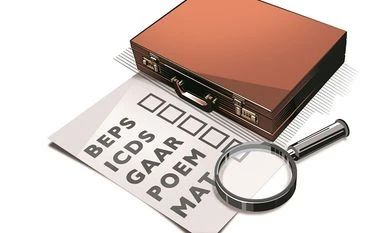
Post-demonetisation, Income Tax department has heightened scrutiny to plug any tax evasion and ensure that individuals and companies have not turned black money into white using the banking and financial system.
Since November 8, 2016, Narendra Modi government has been cracking the whip on black money hoarders.
Here are some transactions that will come under The Central Board of Direct Taxes (CBDT)'s scrutiny
1. Deposits over Rs 10 lakh a year
According to a report published in Business Standard, the CBDT, in a January 17 notification made it mandatory for a banking company or a cooperative bank to report cash deposits more than to Rs 10 lakh or more in a financial year, in one or more accounts (other than a current account and time deposit) of a person. On November 16, the CBDT had asked banks and post offices to report all deposits above Rs 2.5 lakh in savings accounts, and those in excess of Rs 12.5 lakh in current accounts, made during the 50-day window for depositing demonetised high-value notes. Banks and post offices were notified to file a relevant statement of financial transaction on or before January 31, 2017.
2. Cash payments of Rs 1 lakh or more
Payments of an amount aggregating to Rs one lakh or more in cash, along with payments of Rs 10 lakh or more made by any mode (including cheque or wire transfer), towards settling credit card dues in a year will also have to be reported.
3. Expensive cars
Yes, car purchases are certainly under I-T scanner. Car dealers who have shown large cash deposits and high sales figures in November have been sent notices asking them to submit details of their customers. A report said that every car purchase after 8 November is under the income tax scanner and that customers could begin getting notices. According to a report published in The Economics Times, India has just 24.4 lakh taxpayers who declared an annual income of over Rs 10 lakh yet 25 lakh new cars, including 35,000 luxury cars, are being bought every year for last five years.
A nation of over 125 crore people had only 3.65 crore individuals filing their tax returns in the assessment year 2014-15, an official said alluding to a huge number of individuals being outside the tax net.
4. Property purchase of over Rs 30 lakh
CBDT wants report on sale of property over Rs 30 crore. The Property Registrar will have to report sale or purchase by any person of immovable property for an amount of Rs 30 lakh or more to tax authorities, the notification said.
5. FOREX upto Rs 10 lakh or more
Purchase of foreign exchange, including travellers cheque and forex card, aggregating to Rs 10 lakh or more would also need to be reported.
6. Jewellery and ornaments
There will be no seizure of gold jewellery and ornaments to the extent of existing guidelines during search operations. However, you can land in hot water if your gold jewellery and ornaments exceed 500 grams, in case of a married lady, 250 grams per unmarried lady and 100 grams per male member of a family during search operations, according to The New Indian Express
If the taxman knocks are your door, how will you respond?
The depositors are expected to file their response online. According to a report published in Business Standard, a new e-platform put in place by the Central Board of Direct Taxes will be used for this. The IT department can also ask people for additional information, if required.
How many such cases of suspicious deposits have the tax authorities found?
According to Business Standard, 1.5 lakh account holders have deposited Rs 10 lakh or more in their accounts. Moreover, deposits in as many as one crore accounts, belonging to 75 lakh people have aroused suspicion of the tax authorities, the report added. It also said that the 1,100 searches carried out since 8 November have yielded Rs 600 crore in cash, of which Rs 150 crore is in new currency. The Income-tax department has issued notices to over 50 car dealers, asking them to furnish details of customers who have bought cars after November 8, following the demonetisation of 500- and 1,000-rupee currency notes.