PSBs told to push for financial inclusion, expand insurance coverage

The Centre has also asked state-owned banks to enter into co-lending arrangements with NBFCs and MFIs
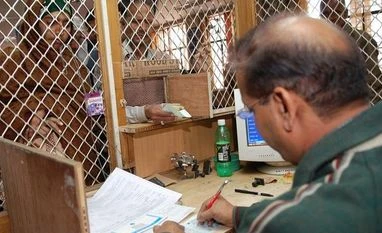
bank
For giving a leg up to agri-credit, PSBs have been asked to identify beneficiary farmers under the PM-KISAN scheme and provide them Kisan Credit Cards
Nikunj Ohri New Delhi
4 min read Last Updated : Oct 21 2021 | 1:21 AM IST
The Centre has asked public sector banks (PSBs) to aggressively target financial inclusion, expand pension and insurance coverage and, at the same time, use financial technology (fintech) to extend credit to borrowers during the festive season through co-lending arrangements.

As PSBs have started their credit outreach programmes to support the economy, the government is planning district-wise loan melas, similar to the ones organised in October 2019. These are expected to be launched next month. 

Banks have been given a broad outline by the government, ranging from financial inclusion to signing co-lending agreements with non-banking financial companies (NBFCs) and microfinance institutions (MFIs). Banks have been asked to identify individuals who are 21 years of age, through the voters’ list, and do not have a bank account. Banks will have to open accounts for such individuals under the Pradhan Mantri Jan Dhan Yojana (PMJDY). 

In order to give a digital push, state-owned lenders have been given a target to provide RuPay cards to 100 per cent account holders under the PMJDY in metro and urban areas, and 90 per cent account holders in semi-urban and rural areas. About 315 million RuPay cards had been issued to PMJDY account holders as of October 10.
FESTIVE PUSH
  • PSBs to target individuals aged 21 years without bank accounts
  • Aim to provide 100% RuPay cards to PMJDY account holders in metro and urban areas
  • Cover PMJDY account holders with PMJJBY, PMSBY, APY by classifying them in three segments
  • Provide Kisan Credit Cards to PM-KISAN beneficiaries
  • Enter into co-lending arrangements with NBFCs, MFIs
The Reserve Bank of India’s (RBI’s) financial inclusion index, which captures the extent of financial inclusion in the country, for the year ended March 2021 was 53.9, as against 43.4 for the period ended March 2017. 

For operative PMJDY accounts, banks have been asked to cover every household under the PM Jeevan Jyoti Bima Yojana (PMJJBY). They have been told to identify PMJDY beneficiaries up to 40 years of age and cover them under the PMJJBY, the PM Suraksha Bima Yojana, and the Atal Pension Yojana (APY). Account holders above 50 years of age should be covered under the PMSBY. 

Of the total 436.4 million PMJDY accounts, 368.6 million, or 85.6 per cent, were operative as on August 18. The PMJJBY and PMSBY were launched in 2015 to provide life and accidental insurance cover of Rs 2 lakh each to all beneficiaries enrolled under the schemes through their banks, with annual premiums of only Rs 330 and Rs 12, respectively. Cumulative enrolments under the PMJJBY are little over 100 million, and 230 million under the PMSBY. 

For giving a leg up to agri-credit, PSBs have been asked to identify beneficiary farmers under the PM-KISAN scheme and provide them Kisan Credit Cards. The government has so far sanctioned 25 million Kisan Credit Cards with Rs 2.62 trillion credit limit. 

Co-Lending Model

The Centre has also asked state-owned banks to enter into co-lending arrangements with NBFCs and MFIs. As NBFCs and MFIs have a far better reach in rural areas, such lenders will on-board borrowers, and finance loans. Then, banks will sign an agreement with NBFCs and reimburse NBFCs about 80 per cent of the loan amount. The remaining 20 per cent of the loan amount will be retained by such non-bank lenders in their books.

This would help in tackling two broad issues. One, such MFIs lack funds but have a better reach; second, the rate of interest for borrowers would come down from 22-24 per cent to effectively 14-15 per cent.

PSBs would benefit by entering a new market to lend without having a physical presence, and the responsibility of collection and recovery would lie with NBFCs and MFIs.

One subscription. Two world-class reads.

Already subscribed? Log in

Subscribe to read the full story →
*Subscribe to Business Standard digital and get complimentary access to The New York Times

Smart Quarterly

₹900

3 Months

₹300/Month

SAVE 25%

Smart Essential

₹2,700

1 Year

₹225/Month

SAVE 46%
*Complimentary New York Times access for the 2nd year will be given after 12 months

Super Saver

₹3,900

2 Years

₹162/Month

Subscribe

Renews automatically, cancel anytime

Here’s what’s included in our digital subscription plans

Exclusive premium stories online

  • Over 30 premium stories daily, handpicked by our editors

Complimentary Access to The New York Times

  • News, Games, Cooking, Audio, Wirecutter & The Athletic

Business Standard Epaper

  • Digital replica of our daily newspaper — with options to read, save, and share

Curated Newsletters

  • Insights on markets, finance, politics, tech, and more delivered to your inbox

Market Analysis & Investment Insights

  • In-depth market analysis & insights with access to The Smart Investor

Archives

  • Repository of articles and publications dating back to 1997

Ad-free Reading

  • Uninterrupted reading experience with no advertisements

Seamless Access Across All Devices

  • Access Business Standard across devices — mobile, tablet, or PC, via web or app

Topics :Financial InclusionPSBspublic sector banksInsurance coverageNBFCs

Next Story



