
RBI announces measures to boost credit flow to real estate sector
The requirement of standard asset provision of 0.25 per cent will continue to apply on all such loans, the notification added
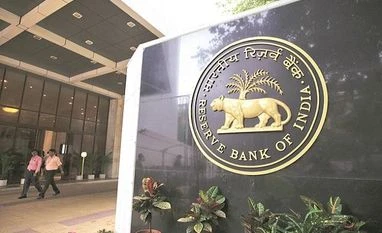 "RBI announces measures to boost credit flow to real estate sector")
premium
WebinarsNew
Deep DiveNew
Explore Business Standard
The requirement of standard asset provision of 0.25 per cent will continue to apply on all such loans, the notification added
In a bid to increase flow of credit to the real estate sector, the Reserve Bank on Friday rationalised the risk weightage to LTV (loan to value) ratio for all new housing loans sanctioned up to March 31, 2022.
As per a notification issued by the RBI, new housing loans will attract a risk weight of 35 per cent where LTV is less than 80 per cent and a risk weight of 50 per cent where LTV is more than 80 per cent but less than 90 per cent.
This measure, according to the RBI, is expected to give a fillip to bank lending to the real estate sector which is critical for economic recovery, given its role in employment generation and the inter linkages with other industries.
"As a countercyclical measure, it has been decided to rationalise the risk weights, irrespective of the amount. The risk weights for all new housing loans to be sanctioned on or after the date of this circular and upto March 31, 2022," the notification said.
The requirement of standard asset provision of 0.25 per cent will continue to apply on all such loans, the notification added.
Commenting on the RBI's move, Square Yards CEO Tanuj Shori said, "The linking of risk weightage only to LTV ratio vis-a-vis the earlier practice of risk weightage with both pricing and LTV augurs well for the sector particularly for high end properties which have been facing severe downward demand pressures."
Anarock Chairman Anuj Puri said the LTV ratio is calculated by dividing the amount borrowed by the value of the property in percentage terms.
For instance, if one purchases a home valued at Rs 80 lakh and for this makes a down payment of Rs 10 lakh, Rs 70 lakh will need to be borrowed.
"The risk weightage assigned to LTV will free up banks' capital for additional lending. It will also help them to bring down the lending rates because they will have spare capital to lend," Puri said.
Since banks will have additional capital to lend, availing home loans at attractive interest rates will be possible, he added.
Already subscribed? Log in
Subscribe to read the full story →

3 Months
₹300/Month
1 Year
₹225/Month
2 Years
₹162/Month
Renews automatically, cancel anytime

Premium stories handpicked daily by our editors


News, Games, Cooking, Audio, Wirecutter & The Athletic
Digital replica of our daily newspaper — with options to read, save, and share


Insights on markets, finance, politics, tech, and more delivered to your inbox
In-depth market analysis & insights with access to The Smart Investor


Repository of articles and publications dating back to 1997
Uninterrupted reading experience with no advertisements


Access Business Standard across devices — mobile, tablet, or PC, via web or app
First Published: Oct 16 2020 | 11:03 PM IST

