Setting the ball rolling on digital payments through the offline mode, the Reserve Bank of India (RBI) on Monday released a framework for such payments, wherein it stated that the upper limit of an offline payment transaction will be Rs 200, the overall limit Rs 2,000 on a payment instrument at any point in time until the balance in the account is replenished.
Offline payments can be made using any channel or instrument like cards, wallets, and mobile devices, the RBI had stated.
According to the RBI, an offline payment means a transaction not requiring internet or telecommunication (telecom) connectivity to take effect.
“Offline transactions are expected to give digital transactions a push in areas with poor or weak internet or telecom connectivity, particularly in semi-urban and rural areas,” the RBI said.
In October last year, the central bank had indicated that it would come up with a framework for carrying out small-value digital payments in the offline mode across the country, after the pilot tests undertaken by various entities during September 2020 and July 2021 gave encouraging feedback.
The central bank had announced its intention of doing pilot tests on transfers without internet in the developmental and regulatory statement dated August 6, 2020. After that, three pilots were successfully conducted under the scheme in different parts of the country between September 2020 and June 2021, involving small-value transactions covering a volume of 241,000 for a value of Rs 1.16 crore.
The RBI said offline payments will be made in proximity (face-to-face) mode only and offline payment transactions can be offered without additional factor authentication (AFA). However, replenishment of the used limit (Rs 2,000) will be allowed only in online mode with AFA.
The central bank has stated that since the transactions are offline, alerts (by way of text messages and/or email) will be received by the customer after a time lag.
Further, the offline mode of payment can be enabled only after obtaining specific consent of the customer. In the case of cards, such transactions can be allowed without the need to switch on the contactless transaction channel.

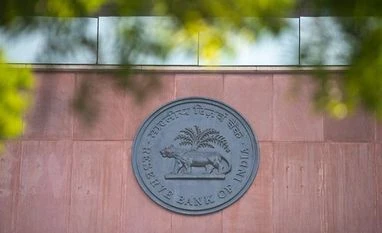 "RBI caps upper limit of offline payment transaction at Rs 200")











