RBI enjoys equal regulatory power over both private and public banks: Govt

RBI tells government no 'systematic irregularity' in banking system; PNB fraud due to failure of bank's three layers of defence
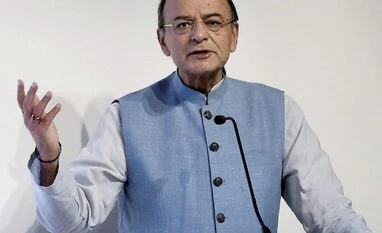
Finance Minister Arun Jaitley
Somesh Jha New Delhi
Last Updated : Apr 05 2018 | 2:30 AM IST
The Union government has informed the Parliament that the regulations framed by the Reserve Bank of India (RBI) apply equally to both public and private sector banks, in the light of the ongoing debate that the regulator doesn't enjoy full regulatory supervision over state-run banks as against private banks.

“Fraud is an act of commission and the regulatory measures instituted by RBI apply equally to public and private sector banks. As such perpetration of frauds is not linked to ownership structure,” Minister of State for Finance Shiv Pratap Shukla said, in a written reply in Rajya Sabha on Tuesday. Finance Minister Arun Jaitley told the Upper House that the government is not presently considering any proposal for privatising public sector banks.

The government’s comments come at a time when RBI governor Urjit Patel had decried lack of regulatory powers to take action against erring public sector banks. In a public speech last month, he pitched for making bank regulation ownership-neutral, saying the regulator had “very limited authority” over state-run banks since it did not have the power to replace the boards of these banks or force a merger, nor could it revoke the licence of a bank for any activity undertaken. This was not the case when it comes to private sector banks, he had argued.

Finance Ministry officials said, on the conditions of anonymity, that Banking Regulation Act 1949, under which RBI is the regulator and supervisor of the banking system, doesn’t differentiate between public and private sector banks.

The RBI has also reverted to the government’s missive, in the wake of Rs 13-billion scam at Punjab National Bank reported earlier this year, seeking its response on lapses in the banking system.

“RBI has apprised that there are no ‘systematic irregularities’ in the banking sector in India, though banks may currently be faced with some transient operational issues in their functioning,” Shukla said in Rajya Sabha.

The regulator told the government that its detailed set of guidelines issued to banks to institutionalise robust and effective internal controls would help in minimising the incidence of frauds.

Days after PNB reported the fraud related to Rs 13 billion worth fake letters of undertaking issued to group of companies led by Mehul Choksi and Nirav Modi, the finance ministry, in a missive to RBI, raised questions on whether it exercised its regulatory power under various provisions of the Banking Regulation Act to detect the scam.

The government feels that RBI has enough regulatory powers to give directions to banks, audit its books, decide policy on loans, direct changes in management and approve appointment and removal of auditors in banks, as per various provisions of the Banking Regulation Act.

“The government has always consulted the RBI in appointing the top management of every bank. It has never raised an objection as such,” said a senior finance ministry official.

The RBI has now informed the government that the fraud at PNB took place due to the failure of all the three lines of defence, despite an elaborate audit infrastructure operational at the Delhi-based bank.

“In case of PNB, there has been a failure of all lines of defence resulting in the perpetration of such large value fraud, despite an elaborate audit infrastructure being operational in the bank,” the government said, citing the RBI’s assessment.

The RBI said that enterprise-wide risk of banks is managed under three lines of defence framework that provides adequate checks and balances. The first line of defence comes from controls at line functions at the business unit level; the second consists of overseeing risk management that monitors and facilitates implementation of effective risk-management practices by the management.

One subscription. Two world-class reads.

Already subscribed? Log in

Subscribe to read the full story →
*Subscribe to Business Standard digital and get complimentary access to The New York Times

Smart Quarterly

₹900

3 Months

₹300/Month

SAVE 25%

Smart Essential

₹2,700

1 Year

₹225/Month

SAVE 46%
*Complimentary New York Times access for the 2nd year will be given after 12 months

Super Saver

₹3,900

2 Years

₹162/Month

Subscribe

Renews automatically, cancel anytime

Here’s what’s included in our digital subscription plans

Exclusive premium stories online

  • Over 30 premium stories daily, handpicked by our editors

Complimentary Access to The New York Times

  • News, Games, Cooking, Audio, Wirecutter & The Athletic

Business Standard Epaper

  • Digital replica of our daily newspaper — with options to read, save, and share

Curated Newsletters

  • Insights on markets, finance, politics, tech, and more delivered to your inbox

Market Analysis & Investment Insights

  • In-depth market analysis & insights with access to The Smart Investor

Archives

  • Repository of articles and publications dating back to 1997

Ad-free Reading

  • Uninterrupted reading experience with no advertisements

Seamless Access Across All Devices

  • Access Business Standard across devices — mobile, tablet, or PC, via web or app

Next Story



