RBI monetary policy preview: Reverse repo hike not seen; G-SAP taper likely

Analysts keen to see if more members of the six-strong monetary policy committee call for changing the stance to neutral: like Jayanth Varma did in August.
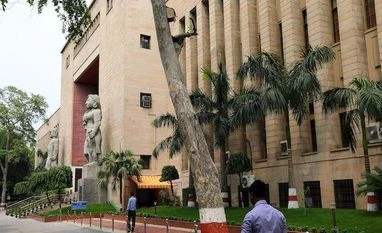
RBI
RBI six-member monetary policy committee will meet October 6-8. (File photo)
Manojit Saha Mumbai
6 min read Last Updated : Oct 03 2021 | 8:03 PM IST
The 65-bps gap between the repo and the reverse repo rate ignited a debate after the last review of the Reserve Bank of India’s monetary policy in August. Jayanth Varma, a member of the RBI’s monetary policy committee, argued restoration of the rate corridor: the gap between the repo and reverse repo rate to 25 bps. (100 bps = 1 percentage point)

The six-member committee is meeting October 6-8 to review the policy and its decision will be announced on the last day. The committee is widely expected to leave the repo rate unchanged, as analysts wait to see if any other member joins Varma in supporting changing the stance to neutral.

Varma was the only one to dissent in the August review meeting when he voted against maintaining the accommodative stance of the monetary policy. The gap was 25 bps before the coronavirus pandemic hit India early 2020, prompting the government to declare a nationwide lockdown that wrecked the economy. In the March and May monetary policy review in 2020, the RBI reduced the reverse repo rate more than the repo rate thereby widening the gap.

Varma said the 3.35% reverse repo has become the effective rate in the economy, as there is a large liquidity surplus. “The way I see it is that 3.35 per cent is lower than what is desirable. Interest rate closer to 4 per cent and sustaining that for a reasonable period is what I think is important,” he said in an interview to Business Standard after the August policy minutes were made public.


Some economists say as economic activities become normal, so should the monetary policy. Restoring the rate corridor is one way to restore normalcy, but the RBI so far refrained from suggesting that the process of normalisation has started.

Economists said policy normalisation may start in October, but not necessarily with a hike in the reverse repo rate.

“RBI will gradually start the normalisation process in the October policy, but do so while keeping the accommodative monetary stance unchanged, thereby delinking its liquidity absorption actions from acting as a timing-signal for potential increase of the policy repo rate in the short-term,” said Kaushik Das, chief economist-India and South Asia at Deutsche Bank AG.

Policy normalisation?

Last week the RBI set the cut-off yield of the 7-day variable rate reverse repo auction at 3.99%, sparking speculation that it is set to start the normalisation process.

“With the 7-day VRRR cut-off coming at 3.99%, questions have been raised once again, whether this is a signal that the RBI will consider start hiking the reverse repo in the Oct policy itself or not. We will be pleasantly surprised if RBI goes for it, but our view is that a reverse repo liftoff is more likely in the Dec’21 policy rather than in the Oct’21 policy,” Das said.

“At this juncture we are not reading too much into the 7-day cut off,” said Suyash Choudhary, Head-Fixed Income, IDFC Asset Management Co Ltd.

“This is because an intentional signal like this would risk term spreads on money markets as well as expectations with respect to the path of normalization getting unanchored. We would rather assume for now that the RBI continues to want an orderly evolution of financial conditions in line with the intent expressed earlier,” Choudhary told Business Standard.

Das, the Deutsche Bank executive, said the central bank would wait to see if Covid-19 cases increase after the festival season in October. If risks do not manifest, then it can be ready to start hiking the reverse repo rate from the December 2021 policy.


Deutsche Bank said two 20 bps reverse repo rate hikes in December 2021 and February 2022 policy reviews will be the ideal pace of sequencing of normalising the policy rate corridor, rather than going for 40bps hike in one go, either in the December 2021 or February 2022 policy.

It is unlikely that the RBI will change the accommodative stance even if the repo-reverse repo gap is not narrowed, said economists.

Stance change unlikely

“We would assign a very low probability to a stance change in October. While commodity prices have risen further, CPI for the September quarter will likely average much lower than the RBI’s recent forecast,” said Choudhary, the IDFC AMC executive. “… a shift in stance at this juncture, especially in light of recent communication by the RBI leadership, may risk sending a disruptive signal which in turn may work against an orderly evolution of financial conditions,” he said.

Choudhary argued steps towards normalization can be undertaken while keeping the stance accommodative.

Tapering of the bond buying under the government securities acquisition programme could be one of those signals. The GSAP programme--a first of its kind in the Indian context--was introduced in April with the announcement of government bond buying by the central bank of Rs 1 trillion in the April-June quarter. In the July-September period, sovereign papers worth Rs 1.2 trillion were purchased.

“Liquidity management is likely to be the first course of action, which is already underway through more frequent absorption measures as well as a likelihood that incremental infusion (via GSAP for instance) will be slow,” said Radhika Rao, a senior economist with DBS Bank.

“Markets will view the October meeting with interest to gauge the shift in policy guidance, which might signal that December’s review is ‘live’ for a gradual change in direction, including a calibrated increase in the reverse repo rate,” she said.

Das agreed with the view that the quantum of bond purchases under the GSAP programme may be trimmed, along with longer tenor variable rate repo auction to suck out liquidity.

“We expect Rs 2 trillion in longer tenor VRRR to absorb liquidity on a durable basis. RBI will also likely reduce the quantum of GSAP purchase for the Oct-Dec’21 and Jan-March’22 quarters (it should be about INR750bn in each quarter, if RBI decides to maintain the same proportion of GSAP purchases to net market borrowing during 1HFY22), in our view, from the INR 1.2 trn committed for July-Sep’21, and will likely conduct it in the form of “twist operations”, so as to not add further to the large liquidity surplus,” he said. 

One subscription. Two world-class reads.

Already subscribed? Log in

Subscribe to read the full story →
*Subscribe to Business Standard digital and get complimentary access to The New York Times

Smart Quarterly

₹900

3 Months

₹300/Month

SAVE 25%

Smart Essential

₹2,700

1 Year

₹225/Month

SAVE 46%
*Complimentary New York Times access for the 2nd year will be given after 12 months

Super Saver

₹3,900

2 Years

₹162/Month

Subscribe

Renews automatically, cancel anytime

Here’s what’s included in our digital subscription plans

Exclusive premium stories online

  • Over 30 premium stories daily, handpicked by our editors

Complimentary Access to The New York Times

  • News, Games, Cooking, Audio, Wirecutter & The Athletic

Business Standard Epaper

  • Digital replica of our daily newspaper — with options to read, save, and share

Curated Newsletters

  • Insights on markets, finance, politics, tech, and more delivered to your inbox

Market Analysis & Investment Insights

  • In-depth market analysis & insights with access to The Smart Investor

Archives

  • Repository of articles and publications dating back to 1997

Ad-free Reading

  • Uninterrupted reading experience with no advertisements

Seamless Access Across All Devices

  • Access Business Standard across devices — mobile, tablet, or PC, via web or app

Topics :RBI monetary policyRBI repo rateIndia economy

Next Story



