RBI policy today: Language, not rates, to be focus as GST, monsoon roll in

Central bank could revise inflation forecast downward; growth forecast could be revised too
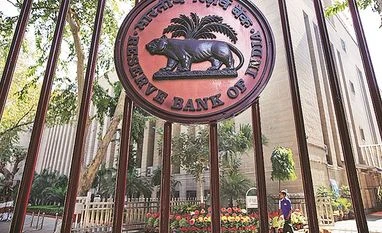
RBI, reserve bank of India
Anup Roy Mumbai
Last Updated : Jun 07 2017 | 10:23 AM IST
The Reserve Bank of India (RBI) is widely expected to keep its policy rates unchanged at Wednesday’s monetary policy review. The rates are to be announced a few hours from now.

However, the policy stance could still be 'neutral', which would mean that the central bank is prepared to move rates on either side. The RBI had changed its stance in the February policy. Instead of action on rates, the language of the policy statement will be important in today's review. 

While the present set of numbers point towards an accommodative stance, the numbers can reverse their course by December and taking a call on policy relying on the present set of numbers could be deceptive, warn economists.

For example, the retail inflation in April was 2.99 per cent, well below RBI’s own target of four per cent. However, the inflation print could turn out to be in the 4.5-5 per cent range by December 2017, according to Chetan Ahya, Morgan Stanley’s global co-head of economics and chief Asia economist.

Growth, for now, has taken a hit due to demonetisation but should bounce back soon. Therefore, a pause at this point could be more appropriate, said a Business Standard Poll of 12 economists on Monday.

However, a status quo policy doesn’t mean that it would be any less important. The RBI can send signals to the market through the tone of its policy statement. Analysts expect the central bank to revise its inflation forecast downward and that would be interpreted as dovish by the market.

Similarly, RBI’s forecast on growth could be revised too. Further, the central bank’s assessment of issues related to the goods and services tax (GST) and the impact on inflation due to the revision in house rent allowance for government employees would also be carefully analysed.

If GST is introduced in July, the inflation data in August could give some early indication of the tax regime's possible impact on prices. Besides, the central bank will have to wait to assess the impact of the monsoon too. RBI’s take on each of these issues would be carefully watched.

Some economists also say the ‘corridor’, or the difference between the repo rate and the reverse repo rate, has become an important parameter in RBI policy now. Any statement on the corridor, which was narrowed down to 25 basis points (bps) in the April policy from 50 bps earlier, would be very important.

The policy repo rate is now at 6.25 per cent, while the reverse repo rate is at six per cent. Both the rates should remain the same for the entire calendar year, say economists.

One subscription. Two world-class reads.

Already subscribed? Log in

Subscribe to read the full story →
*Subscribe to Business Standard digital and get complimentary access to The New York Times

Smart Quarterly

₹900

3 Months

₹300/Month

SAVE 25%

Smart Essential

₹2,700

1 Year

₹225/Month

SAVE 46%
*Complimentary New York Times access for the 2nd year will be given after 12 months

Super Saver

₹3,900

2 Years

₹162/Month

Subscribe

Renews automatically, cancel anytime

Here’s what’s included in our digital subscription plans

Exclusive premium stories online

  • Over 30 premium stories daily, handpicked by our editors

Complimentary Access to The New York Times

  • News, Games, Cooking, Audio, Wirecutter & The Athletic

Business Standard Epaper

  • Digital replica of our daily newspaper — with options to read, save, and share

Curated Newsletters

  • Insights on markets, finance, politics, tech, and more delivered to your inbox

Market Analysis & Investment Insights

  • In-depth market analysis & insights with access to The Smart Investor

Archives

  • Repository of articles and publications dating back to 1997

Ad-free Reading

  • Uninterrupted reading experience with no advertisements

Seamless Access Across All Devices

  • Access Business Standard across devices — mobile, tablet, or PC, via web or app

Next Story



