
RBI will keep injecting liquidity via OMOs till March-end: Viral Acharya
Acharya said RBI has also provided infusion of liberal liquidity through term repo in addition to the usual provision via the liquidity adjustment facility
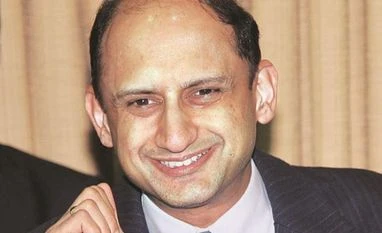 "RBI will keep injecting liquidity via OMOs till March-end: Viral Acharya")
WebinarsNew
Deep DiveNew
Explore Business Standard
Acharya said RBI has also provided infusion of liberal liquidity through term repo in addition to the usual provision via the liquidity adjustment facility
The Reserve Bank of India (RBI) will continue to inject liquidity into the banking system through open market operation (OMO) purchases till the end of this fiscal, its deputy governor Viral Acharya said.
In the current financial year, the central bank has conducted OMO purchases to the tune of Rs 1.36 trillion, with over Rs 1 trillion of the infusion in the last three months, he said.
Late last month, the RBI had announced that it would conduct purchases of government securities under OMO for an amount of Rs 400 billion in December to meet liquidity needs.
"We expect that this increased frequency and quantum of OMO purchases may be required until end of March, but the exact calibration will depend on sustained changes in the behaviour of currency in circulation and the magnitude of sterilisation for RBI's forex operation, which keeps evolving with external sector conditions," Acharya told reporters in a post policy conference on Wednesday.
In the fifth bi-monthly monetary policy on announced Wednesday, RBI left repo rates unchanged at 6.5 per cent.
Acharya said RBI has also provided infusion of liberal liquidity through term repo in addition to the usual provision via the liquidity adjustment facility (LAF).
"We also plan to conduct additional long-term repo operations to meet transient liquidity demand that is likely to emerge later this month on account of the third tranche of advance tax outflows," he said.
Talking about the liquidity crisis faced by the non-banking finance companies (NBFCs) and housing finance companies (HFCs), Acharya said RBI has been watching the market developments closely since the end of August.
"We have been in regular touch with the Securities and Exchange Board of India (Sebi) to assess the fallout in terms of mutual fund redemptions and the resulting roll-over risks for NBFCs and HFCs," he said.
First Published: Dec 06 2018 | 2:37 PM IST

