RCEP opt-out: Modi's Trumpian trade exit may be tactical retreat for India

Modi and his ministers are now selling his refusal to join RCEP as a victory for India's poor
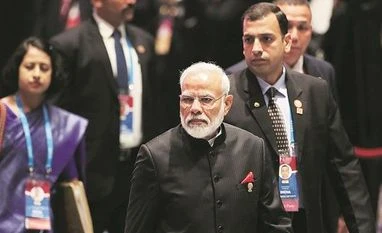
Modi, PM Modi
Prime Minister Narendra Modi on the sidelines of the Asean summit. Photo: Reuters
Iain Marlow and Shruti Srivastava | Bloomberg
4 min read Last Updated : Nov 05 2019 | 7:34 PM IST
As Indian officials held last-minute talks on joining the world’s biggest regional trade deal at a summit in Bangkok, farmers back home were launching nationwide demonstrations -- chanting, holding up placards and burning signs in protest.

Opposition from powerful groups representing millions of farmers -- the most important electoral constituency in the world’s largest democracy -- showed why Prime Minister Narendra Modi pulled India out of the 16-member trade deal known as the Regional Comprehensive Economic Partnership, or RCEP. Despite a landslide re-election win in May, he’s facing a prolonged economic slowdown and unemployment at its highest in four decades.

Modi nonetheless is looking to turn the trade setback into a win. Like U.S. President Donald Trump, who said he withdrew from the Trans Pacific Partnership trade deal to protect American workers, Modi and his ministers are now selling his refusal to join RCEP as a victory for India’s poor.

But it doesn’t necessarily mean Modi is giving up on big economic reforms. His past record with disruptive policies like demonetization, a strengthened hand in India’s upper house of parliament and more than four years left in his second term might mean he could still surprise investors with structural reforms such as a long-awaited loosening of restrictive land and labor rules.

“If you look at the macro situation, he has to create a better climate for investment,” said Niranjan Sahoo, who has authored two books on Indian politics and is currently a senior fellow at the Observer Research Foundation research group in New Delhi. “And that will not happen unless you liberalize land and labor and other areas that have been untouched for several decades.”

‘Significant Slowdown’

For Modi, the current domestic situation could not have been less conducive to signing an international trade pact designed to more closely integrate India’s economy with the countries of RCEP, which include China, Japan, Australia, South Korea, New Zealand and the 10 members of the Association of Southeast Asian Nations.

India’s economic slowdown has worsened dramatically since Modi won re-election on the back of popular welfare programs and a firm military response to a terrorist attack blamed on Pakistan. And although Indian politicians are averse to freer trade at the best of times, it would’ve been extremely risky to open India’s markets to cheap goods from China, as well as agricultural imports from Southeast Asia, at a time of rising discontent.

The angst started to show up at the polls, with Modi’s ruling Bharatiya Janata Party only narrowly winning elections in the states of Haryana and Maharashtra, where they were favored heavily. Both states have substantial farmer populations that could have been hit by more competitive rice imports from Southeast Asia and worries were growing about India’s manufacturing sector, which has seen auto-makers suffer a major fall in sales.

“The decision by Prime Minister Modi to pull India out of the RCEP negotiations reflects considerable concerns domestically about the potential impact of RCEP on Indian industry,” said Rajiv Biswas, Asia-Pacific chief economist for IHS Markit. “The Indian economy is experiencing a significant slowdown in growth momentum currently, with sectors like autos and capital goods experiencing a severe slump.”

‘Unequal Deal’

India already has free trade agreements with some parties to RCEP, including Asean, South Korea, Malaysia and Japan. One Indian official, who asked not to be named, criticized these deals for dramatically increasing India’s trade deficit and hurting domestic industry, and said the government couldn’t go ahead with RCEP before renegotiating parts of these deals.

India could still join RCEP at a later date. A group statement at the end of the summit said all participating countries would work to solve outstanding problems “in a mutually satisfactory way.”

Japan in particular expressed hope India could still be included, not least because it would act as another counterweight to China in the group. Similar to Trump’s exit from the TPP, which reduced U.S. influence in the Asia-Pacific, India’s absence puts it on the sidelines of key discussions and could cost it investment down the road.

At least for now, however, Modi gets some political capital back among his core supporters. The question is whether he’ll use that to take some other measures that can unlock growth in Asia’s third-biggest economy.

“This will help the government politically,” said Biswajit Dhar, a professor of economics at Jawaharlal Nehru University in New Delhi, who has advised Indian governments on international trade. “The government can certainly take credit for this and they can say that they listened to the concerns of every stakeholder.”

One subscription. Two world-class reads.

Already subscribed? Log in

Subscribe to read the full story →
*Subscribe to Business Standard digital and get complimentary access to The New York Times

Smart Quarterly

₹900

3 Months

₹300/Month

SAVE 25%

Smart Essential

₹2,700

1 Year

₹225/Month

SAVE 46%
*Complimentary New York Times access for the 2nd year will be given after 12 months

Super Saver

₹3,900

2 Years

₹162/Month

Subscribe

Renews automatically, cancel anytime

Here’s what’s included in our digital subscription plans

Exclusive premium stories online

  • Over 30 premium stories daily, handpicked by our editors

Complimentary Access to The New York Times

  • News, Games, Cooking, Audio, Wirecutter & The Athletic

Business Standard Epaper

  • Digital replica of our daily newspaper — with options to read, save, and share

Curated Newsletters

  • Insights on markets, finance, politics, tech, and more delivered to your inbox

Market Analysis & Investment Insights

  • In-depth market analysis & insights with access to The Smart Investor

Archives

  • Repository of articles and publications dating back to 1997

Ad-free Reading

  • Uninterrupted reading experience with no advertisements

Seamless Access Across All Devices

  • Access Business Standard across devices — mobile, tablet, or PC, via web or app

Topics :RCEPRCEP negotiationsRCEP dealRCEP trade ministersrcep meet

Next Story



