Rebellion is the essence of being young: Sudhir Mishra
Interview with filmmaker
Nikita Puri When
Sudhir Mishra's Hazaaron Khwaishein Aisi released in 2005, we were introduced to idealistic students who called each other 'comrade' and dreamt of fashioning a better, more equal world. Leading them was a firebrand called Siddharth, a driven revolutionary who encapsulates today's student leaders. Mishra's unforgettable narrative shows how Siddharth's idealism fades away, and how time changes things with Geeta, once the love of Siddharth's life, and his friend Vikram.
The filmmaker speaks to Nikita Puri about Left idealism, a driving force in Hazaaron Khwaishein Aisi. Excerpts:
Why is it that the zealous Left has broken up into smaller factions with more ease than other parties that are bound by opposing ideologies? Is this because of disillusionment, something like what Siddharth came to feel towards the end? For me the Left is an idea, not a party. When you make an organisation out if it, you require discipline, and a searching mind revolts against discipline. So there will always be a greater lack of agreement among minds which are on a quest.
The problem with the Left is that they claim to believe in scientific stories but they subscribe to the old 19th or 20th century science as the final world. You have to understand that life cannot be encapsulated in one simple ideology, it'll slip away. This is how it slips away in Hazaaron…and the guy you least expect becomes something of a hero. I am not very harsh on Siddharth because he goes on another quest, he realises that he is inadequate at the moment in his understanding of the world and himself.
How much of Left idealism do you see in modern-day India?
Leftist ideas are alive in women's emancipation, in copyright, five-day week and eight-hour workdays; that's the idea of the Left, empowerment of people. It is seeing people also as a resource and capital, rather than some political party.
Is a university environment more conducive to Left idealism?
Universities are more conducive to any kind of idealism, and that's how it should be. There should not be a priest like in Galileo's case, when he sought to prove that the world wasn't flat. Galileos should be free in universities - psychoanalysis, equality, gender - they should be able to choose. There should also be a place for Right-wing ideas.
I spent a lot of time in JNU when my sister was there. The entire Left, much like today, was at loggerheads. Students have a yearning for something that they don't quite understand. Most people who've lived in JNU, if they hadn't been in the middle of all this, 95 per cent of them would have gone ahead and forgotten about this as a phase of life. Rebellion is the essence of being young. Sometimes rebellion is foolish, but the young have a right to be foolish, how would they otherwise know what they want?
Senior political leaders from all political parties should be invited as guest lecturers to share ideas, much like how you get a scientist or filmmaker. Every idea that is not functional in life will disappear, everything that helps you through life will remain, so I don't know why people are being so paranoid about, whether it be communism or Hinduism.
Does passage of time affect one's ideology as responsibilities grow?
Friends look at me and say 'you've remained the same'. I don't have responsibilities, I don't have children, I'm just a filmmaker. But there's a system of a family in society where men and women become nurturers.
During the freedom movement my grandfather went to jail - the nurturing aspect of his life went out of the window then. My mother and her brothers were thrown out of their schools and colleges - they still carry those scars. Mahatma Gandhi was involved with the country, he neglected his children - people even write plays about that.
The idea is to have a more practical rebellion, I don't think one should ever stop rebelling in the head, but you have to fulfil certain responsibilities. Most Left people send their children to not the Left countries, but to America or England; most from extreme Leftists groups in the 60s and 70s went to work with the World Bank, an organisation they were trained to hate. That's what gives the Left a bad name, because you can't articulate a vision of the future to your children.
If you were to do a sequel to Hazaaron...now, how would the story pan out? Where would Siddharth, Vikram and Geeta find themselves?
I'm thinking about it actually, though it's a tall order. The sequel will be a personal story; their ideologies have now broken. It'll now be a personal quest for the beauty and softness that still remains as the atmosphere overall becomes too brutish.

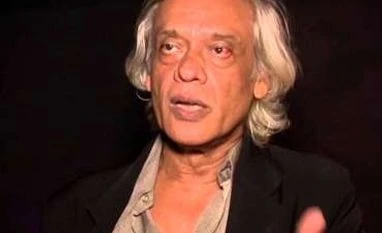 "Rebellion is the essence of being young: Sudhir Mishra")


