Revenue department to brief PMO on Rs 1.67-trillion tax shortfall

Despite a cut in the income tax collection target in the full Budget compared to the interim Budget projections, the target is far from realistic
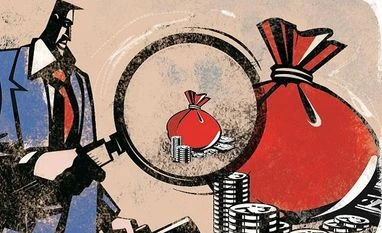
Revenue department to brief PMO on Rs 1.67-trillion tax shortfall
Dilasha SethArup Roychoudhury New Delhi
4 min read Last Updated : Aug 06 2019 | 9:28 PM IST
The Prime Minister’s Office (PMO) is understood to have asked revenue department officials to brief it on how it plans to achieve this year’s tax collection target, given the Rs 1.67-trillion shortfall between the last fiscal year’s Revised Estimates and provisional actuals.

For the financial year 2019-20 (FY20), Finance Minister Nirmala Sitharaman has projected tax revenue (direct plus indirect taxes), after devolution to states, at Rs 17.05 trillion, an achievable 14.8 per cent increase over the FY19 Revised Estimates. However, it is a staggering 29.5 per cent rise over last year’s provisional actuals of Rs 13.17 trillion.

It is understood that the question posed by top levels of the government to the finance ministry’s revenue department will be: How is it planning to achieve the steep year-on-year revenue rise? 

Despite a cut in the income tax collection target in the full Budget compared to the interim Budget projections, the target is far from realistic, say officials from the Central Board of Direct Taxes (CBDT).

The CBDT has been given a collection target of Rs 5.69 trillion in personal income tax, a growth of 19.2 per cent over the previous year’s provisional actuals. The only year when the collection was higher than this was 2016-17, the year of demonetisation and the income declaration scheme when the mop-up grew by 26 per cent. The collections had shot up that year as people regularised their unaccounted income by paying higher levies.

“The income tax collection target is highly challenging to achieve. The targets should be reasonable enough, factoring in the past year’s trend. Outlier years should be kept out of forecasting,” said a senior government official. 

The income tax department, in its post-Budget consultation, had pitched for a realistic target for FY20, as the collections for FY19 fell about Rs 60,000 crore, or 5.1 per cent, lower than the revised Budget target of Rs 12 trillion.

“The ideal target in personal income tax should have been not more than 15 per cent. With economic growth yet to recover, what will really trigger higher tax collection?” questioned an official.

In the Budget, Sitharaman has announced a super-rich surcharge of 25 per cent for those earning between Rs 2 crore and Rs 5 crore, and 37 per cent for those earning above Rs 5 crore. The government is expecting to earn Rs 12,000 crore on account of this hike in surcharge.

“Besides the additional mop-up from the super-rich surcharge, there are no visible factors at the moment that could drive the personal income tax growth to a level estimated in the interim Budget,” said the official.

India’s economic growth fell to a five-year low of 6.8 per cent in FY19, much below the government’s projection of 7.2 per cent. In fact, the fourth-quarter growth decelerated to the lowest in 20 quarters at 5.8 per cent, owing to a decline in investment activity.
 
Filling Gaps
  • Concerns over FY20 tax revenue targets
  • FY19 provisional actuals Rs 1.67 trillion below the Revised Estimates
  • FY20 budgeted target 29% over FY19 provisional actuals
  • Revenue dept to brief top officials on how it plans to achieve FY20 target

However, Revenue Secretary A B Pandey, in an interview to Business Standard, had said the government was looking to achieve its targets by making the income tax collection system more efficient.

“Yes, we think that it is achievable and we have to work in that direction. We have to make our system of personal income tax collection more efficient. If there are any places where there is evasion or people not reporting income, that system will have to be strengthened,” he said.

Meanwhile, collection from the goods and services tax (GST) was above Rs 1 trillion in July, mainly on account of higher mop-up under the Integrated GST. However, the central portion remained subdued, posing challenges for Sitharaman. A growth target of 16 per cent for the Central GST in FY20 reinforces the need for emphasis on data intelligence and policies to plug leakages.

The CGST collection target was revised downwards to Rs 5.26 trillion for FY20, from the Rs 6.1 trillion estimated in the interim Budget, following a 9 per cent shortfall in collection in the previous year.

One subscription. Two world-class reads.

Already subscribed? Log in

Subscribe to read the full story →
*Subscribe to Business Standard digital and get complimentary access to The New York Times

Smart Quarterly

₹900

3 Months

₹300/Month

SAVE 25%

Smart Essential

₹2,700

1 Year

₹225/Month

SAVE 46%
*Complimentary New York Times access for the 2nd year will be given after 12 months

Super Saver

₹3,900

2 Years

₹162/Month

Subscribe

Renews automatically, cancel anytime

Here’s what’s included in our digital subscription plans

Exclusive premium stories online

  • Over 30 premium stories daily, handpicked by our editors

Complimentary Access to The New York Times

  • News, Games, Cooking, Audio, Wirecutter & The Athletic

Business Standard Epaper

  • Digital replica of our daily newspaper — with options to read, save, and share

Curated Newsletters

  • Insights on markets, finance, politics, tech, and more delivered to your inbox

Market Analysis & Investment Insights

  • In-depth market analysis & insights with access to The Smart Investor

Archives

  • Repository of articles and publications dating back to 1997

Ad-free Reading

  • Uninterrupted reading experience with no advertisements

Seamless Access Across All Devices

  • Access Business Standard across devices — mobile, tablet, or PC, via web or app

Topics :Nirmala SitharamanGoods and Services TaxIncome taxUnion Budget 2019GSTCBDTTaxationrevenue departmentCentral Board of Direct Taxes

Next Story


