Revenues from GST could cross Rs 1 trillion a month post anti-evasion steps
The estimated collection for 8 months (July-February) of the current financial year is Rs 4.44 trn
Press Trust of India New Delhi Revenues from the Goods and Services Tax could cross Rs 1 trillion a month towards the end of next financial year once anti-evasion measures like matching of tax data and e-way bill are put in place, finance ministry officials said on Tuesday.
Once the GST return filing process stabilises completely, the Directorate General of Analytics and Risk Management (DGARM) will be put to action for 360 degree profiling and match the database of people filing GST with Income Tax returns filed, they said.
The government has budgeted about Rs 7.44 trillion from GST in the 2018-19 financial year beginning April 1. The estimated collection for 8 months (July-February) of the current financial year is Rs 4.44 trillion. The March collection will take place in April, the start of new financial year, 2018-19.
Officials said the revenue estimates for next fiscal are conservative and could go up depending on enforcement actions taken by the government.
Collections under the GST, implemented from July 1 last year, were over Rs 950 billion for the first month, while in August the figure just over Rs 910 billion. In September, it was over Rs 921.50 billion, October (Rs 830 billion), November (Rs 808.08 billion) and December (Rs 867.03 billion).
As of December 2017, 9.8 million businesses were registered under the GST regime.
"We will soon start matching of the turnover shown in GST returns with the income returns filed with the I-T department. It could begin by second half of next financial year," a senior finance ministry official said.
"Once these measures are put in place, there is no reason why GST revenues would not average Rs 1 trillion every month," he added.
Another official said that the focus of the department will also be on plugging the gaps in the gold and jewellery industry.
"Gold imports have been rising every month despite a 10 per cent customs duty. But where is this imported gold channelled to? With GST in place, the revenue authorities now have the power to seek details about end supplies," the official said.
Import of gold attracts a 10 per cent basic customs duty. On top of that a 12.5 per cent countervailing duty (CVD) was levied prior to GST. Since GST subsumed CVD, hence the GST rate on gold at 3 per cent has to be paid at the time of imports in the form of Integrated GST with effect from July 1.
India is the world's second biggest gold consumer after China. The import mainly takes care of the demand of the jewellery industry.
The official said that once the system stabilises, the intelligence agencies within the revenue department could better monitor end usage of the imported gold.
"DGARM would be utilised to provide intelligence inputs and do big data analytics for taxmen for better policy formulation and taking action against tax evaders," he said.
Set up under the Central Board of Excise and Customs (CBEC), DGARM will use internal and external sources for detailed data mining and risk management.
As per data on GST returns filed by companies opting for composition scheme, as many as 0.5 million companies reported such a turnover which works out to annual sales of Rs 0.5 million only.
Out of 1 million businesses which opted for the composition scheme during the July-September period, about 0.7 million have filed GST returns for the quarter.
Businesses with turnover of up to Rs 2 million are exempt from the GST regime.
The official further said that currently, there is little tracking of goods movement from one state to another and the e-way bill would act as a tool to check tax evasion as then movement of stock and its end use would be monitored.
E-way or electronic way bill is for the movement of goods and can be generated on the GSTN (common portal). Movement of goods of more than Rs 50,000 in value cannot be made by a registered person without an e-way bill.

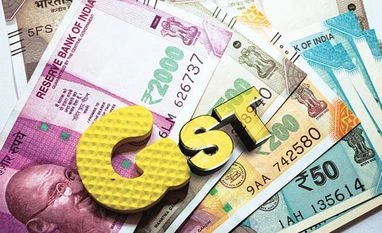 "Revenues from GST could cross Rs 1 trillion a month post anti-evasion steps")

