Rupee recovery will help RBI cut lending rates, says Rangarajan
Says IIP needs a fresh look with new weight to be attached to various commodities
Press Trust of India New Delhi The Reserve Bank of India (RBI) will have greater room to cut lending rates if the pressure on the rupee eases, Prime Minister's Economic Advisory Council Chairman C Rangarajan said Saturday.
“On the last occasion, the decision took was largely influenced by external sector considerations. Wholesale Price Index (WPI) was showing downward sign and non-food manufacturing inflation was below three per cent,” Rangarajan said.
“But the pressure on rupee prevented the RBI to go in that direction (of policy easing) and it took a pause. And therefore, if the pressure on the rupee eases, then it will give greater room for the Reserve Bank,” Rangarajan told reporters on the sidelines of an event.
He was speaking here on the occasion of Statistics Day.
The rupee plunged to an all-time low of over Rs 60 against the dollar on June 26, due to capital outflows.
However, it showed recovery and closed at 59.39 yesterday amid signs of strong fund inflows and hopes the US Federal Reserve may not pull back its quantitative easing programme.
“I think the rupee went down but then it also recovered very much in the last two days. I think capital flows come back and I think the rupee will get further strengthening,” Rangarajan said.
RBI in its mid-quarter policy review earlier this month had kept both the repo rate and cash reserve ratio unchanged at 7.25 per cent and 4 per cent, respectively, on the back of high food inflation, rupee depreciation and uncertainty over foreign fund inflows. In reply to a separate question on recent revision in government data on the Index of Industrial Production (IIP), he said there are issues with respect to certain data series which need relook.
“IIP is one series which needs careful relook. I understand a committee has been set up in order to look at it. We need to find out the new weight that can be attached to the various commodities...New commodities come into production therefore relook is required,” he said.
In his address on the Statistics Day, he said there is also a need to find new sources of data and strengthen the Indian statistical system, particularly labour and employment statistics.
“We must exploit many data sources...Like use of data from the revenue department. We need to go beyond sample surveys. We need to create more data on employment and unemployment at various educational levels,” he said.
Further, he said, employability has become a critical issue and there is a need to find out the gaps in relation to different economic activities.

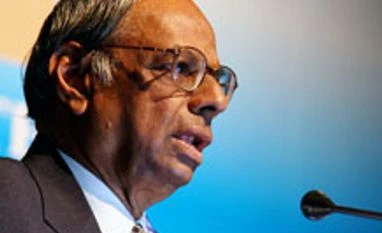 "Rupee recovery will help RBI cut lending rates, says Rangarajan")


 Connect with us on WhatsApp