
Seafood exporters upbeat on UK post Brexit, view it as 'fairer' than EU
In 2016, the EU had toughened its inspection norms for aquaculture products from India
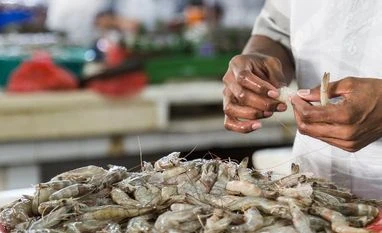 "Seafood exporters upbeat on UK post Brexit, view it as 'fairer' than EU")
premium
Explore Business Standard
In 2016, the EU had toughened its inspection norms for aquaculture products from India
EU, which has initiated steps to treat UK as a non-EU country, explained in a recent note to stakeholders, that the UK will have to be considered as such and will have to put systems in place that satisfy the EU's requirements if it is to export to the Union.
"Subject to any transitional arrangement that may be contained in a possible withdrawal agreement, as of the withdrawal date (30 March 2019), EU food law no longer applies to the United Kingdom," EU said to its stakeholders.
"Given that India is a major supplier of shrimp to UK, I believe separate UK food regulations will be more pragmatic and aligned with mutual trade interests, as opposed to the current stance of EU authorities, which we feel is unfair and unfortunate", said Aditya Dash, managing director, Ram's Assorted Cold Storage Ltd, a leading exporting company based in Odisha.
In 2016, the EU had toughened its inspection norms for aquaculture products from India. An earlier norm called for testing samples from at least 10 per cent of the consignments. This was enhanced to 50 per cent in 2016.
Exporters of this perishable item were in a tizzy after a two-member team visited select seafood processing facilities in Odisha and Tamil Nadu, the leading exporting states, for about 10 days in November, 2017.
They also visited fishing harbours in Paradip and the processing units of Falcon Marine Exports and Shimpo Seafoods in Bhubaneswar. The visiting audit team ended up meeting with officials of the Union commerce ministry and Marine Products Export Development Authority (MPEDA).
Recently, Indian authorities had urged the EU not to ban or blacklist any seafood exporter immediately after finding problems with just one consignment as this extreme step worked against the interests of all stakeholders.
If it is a hard Brexit, then the UK will not need to adjust its laws as part of the arrangement with the EU; if it is a soft Brexit, there will be some compromise aimed at facilitating trade with the EU that will involve a closer alignment of UK laws with those of the EU, said a trade source.
"With the UK out of the Union, it could develop some laws that are more "trade-friendly" but from what I can see, any new law is unlikely to lower the strict requirements of food hygiene and safety that the UK has become used to," the source added.
Already subscribed? Log in
Subscribe to read the full story →

3 Months
₹300/Month
1 Year
₹225/Month
2 Years
₹162/Month
Renews automatically, cancel anytime

Over 30 premium stories daily, handpicked by our editors


News, Games, Cooking, Audio, Wirecutter & The Athletic
Digital replica of our daily newspaper — with options to read, save, and share


Insights on markets, finance, politics, tech, and more delivered to your inbox
In-depth market analysis & insights with access to The Smart Investor


Repository of articles and publications dating back to 1997
Uninterrupted reading experience with no advertisements


Access Business Standard across devices — mobile, tablet, or PC, via web or app
First Published: Feb 08 2018 | 11:41 PM IST


