Aiming to return to seven-eight per cent growth rate, Prime Minister Manmohan Singh on Thursday said India and China should forge cooperation in eight critical areas like infrastructure, energy, manufacturing and agriculture to negate the effect of prolonged global economic crisis. Addressing the future leaders at the Chinese Communist Party's Central Party School, Singh said underlying fundamental of Indian economy, particularly investment and saving rates, are strong and can help get the nation get back to seven-eight per cent economic growth rate. "The prolonged global economic crisis has affected us, as it has many other emerging economies. I believe, however, that this is a temporary disruption. In recent months, we have taken measures to enhance foreign investment flows, speed up implementation of major projects, boost infrastructure development, strengthen our financial markets, reform our tax system and make our business environment more attractive," he said.
India's critical challenges, he said, are areas where opportunities for cooperation between the two nations exist. Singh highlighted eight specific areas for cooperation between India and China -- infrastructure, agriculture productivity, manufacturing, energy, food security, climate change, open trade and stable global order.
"After China, India has been the fastest growing major economy in the world, averaging a growth rate of seven per cent per year over the past two decades and around eight per cent per year during the past ten years. In our own ways, we have also had an impact in shaping the global economy - China in the manufacturing sector and India in the services sector," he said.
India's reliance on China over the past decade has increased with two-way trade growing to $66 billion last year, accounting for about 8.3 per cent of the country's total commerce, up from about 4.9 per cent a decade ago. Its trade deficit with China increased to $39 billion last year, the biggest gap with any of its trading partners.
Stating that India and China need a stable, secure and prosperous Asia Pacific region, Singh said, "Terrorism, extremism and radicalism emanating from our neighbourhood affect both of us directly and can create instability across Asia."
Also, maritime security in the Pacific and the Indian Oceans was vital for the two economies just as peace and stability in West Asia and Gulf are essential for their energy security. "While both India and China are large and confident enough to manage their security challenges on their own, we can be more effective if we work together. Regional stability and prosperity will also gain from stronger connectivity in the Asia-Pacific region. This should be a shared enterprise of India and China," he said.
Seeking Chinese expertise and investment in infrastructure building, the Prime Minister said India plans to invest $1 trillion in the next five years to boost infrastructure in the country. "We need to increase our agriculture productivity in order to reduce rural-urban disparities in income and manage efficiently the process of mass urbanisation," he said, seeking China's help in dealing with the physical, social, environmental and human challenges of mobility and urbanisation.
Singh saw opportunities for China in India's manufacturing sector as well as collaboration on development of renewable energy resources and jointly working in third countries. "Growing population, shrinking land, improving consumption levels and price volatility make food security a key policy priority for us. India has launched a major legislation-based food security programme. Our two countries should pool our resources and expertise in this area," he said.
India and China, he said, can work together to impart stability to the global economy and sustain growth by leveraging their resources, large unsaturated demand, economies of scale and growing income levels.
Stating that economic success requires a favourable external environment, Singh said the two nations should therefore work together to make the international economic environment more conducive to their development efforts."After the prolonged global economic crisis of 2008, we face a fundamentally different future for the world economy. We are in the midst of a significant and ongoing transformation where both political and economic power is being diffused. A multi-polar world is emerging but its contours are not yet clear. "Protectionist sentiments in the West have increased and the global trading regime may become fragmented by regional arrangements among major countries. India and China have a vital stake in preserving an open, integrated and stable global trade regime even as we work together to foster regional economic integration," he said.
India and China should also intensify their efforts to support trade and investment and reduce risks in emerging markets, he said adding cooperation between the two nations will also help accelerate reforms in global financial institutions.
Outlining seven principles of engagement for closer cooperation between India and China, Singh also said the two countries should show sensitivity to each other's interests and sovereignty and move quickly to resolve the boundary issue. "India and China cannot be contained and our recent history is testimony to this. Nor should we seek to contain others," he said.
In his seven principles of engagement, Singh said, "One should reaffirm an unwavering commitment to the principles of 'Panchsheel' and conduct our relationship in a spirit of mutual respect, sensitivity to each other's interests and sovereignty, and mutual and equal security."
He said India has welcomed President Xi Jinping's concept of a new type of great power relations."This is a contemporary development of the Panchsheel or the five principles of co-existence, elaborated by Prime Minister (Jawaharlal) Nehru and Premier Zhou Enlai in the 1950s," Singh said.
A day after reaching accords on cooperation in border defence and trans-border river issues, Singh said maintaining peace and tranquillity in the India-China border region has been the cornerstone of the bilateral relationship. "It is essential for mutual confidence and for the expansion of our relations. We should do nothing to disturb that. Indeed we can achieve it by adhering to our agreements and utilising our bilateral mechanisms effectively. At the same time, we should move quickly to resolve our boundary issue," he said.
The address to the Communist Party Central School is a rare honour given to visiting leaders from abroad. The Prime Minister also spelt out a six-point roadmap of areas offering cooperation between the two countries and invited Chinese investment in Indian plans to invest $one trillion in infrastructure in the next five years.

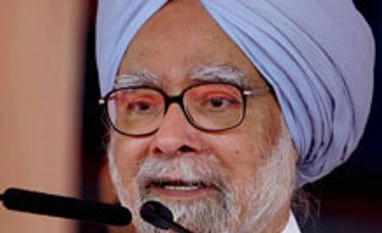 "Singh for ties in critical areas with China")


 Connect with us on WhatsApp