StatsGuru: 03-March-2014
Taking stock of the country's telecom sector
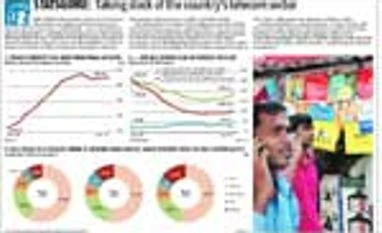
Busness Standard New merger and acquisition norms for the telecom sector have once again focused attention on the industry. By some indicators, it is doing well - it has certainly seen phenomenal growth in subscriber base since 2008, as Table 1 shows, although there has been a correction recently as telcos cut down on unused connections. However, there are other problems. As Table 2 shows, the number of SMSes sent by users has begun to decline - and average revenue per user, or ARPU, has fallen sharply.
The composition of revenue of GSM telephony operators reflects a shift in customer usage, too, evident in Table 3. Calls are a much smaller source of revenue than they were earlier; and SMS revenue has shrunk in the past two years as users turn to data-based messaging services like WhatsApp. Revenue from such value-added services has increased sharply. Thanks to these structural changes in the market, profit growth has declined, as Table 4 shows.
Market consolidation is clearly overdue, as Table 5 shows. The four or five largest operators have the lion's share of the market, but there are many other smaller operators with minimal subscribers squatting on spectrum. But the industry continues to be overloaded with debt, as Table 6 reveals, complicating the question of acquisition.

 "StatsGuru: 03-March-2014")


 Connect with us on WhatsApp