Tamil Nadu, Mizoram, Tripura, Meghalaya, Andhra Pradesh, Kerala and Uttarakhand are front-runners in reducing extreme poverty — as identified by the Sustainable Development Goals (SDGs) of the UN — while Gujarat, Uttar Pradesh, Maharashtra, Bihar and Madhya Pradesh are “aspiring” to do so, reveals a NITI Aayog report.
Goa, Manipur and Kerala are front-runners in reducing hunger and malnutrition, while 10 states and four union territories — including Chhattisgarh, Odisha, Gujarat and Maharashtra — have been put under the “aspirants” category in the SDG Index India Baseline Report-2018, released by the government think tank on Friday.
Overall, in all the 13 of the 17 identified SDGs, Himachal Pradesh, Kerala, Tamil Nadu and Puducherry and Chandigarh are the front-running states in implementing most of the goals, while Assam, Bihar and Uttar Pradesh are the worst-performing states and have been categorised as “aspirants”.
The SDGs are a set of 17 universal goals and 169 targets to help organise and streamline development actions for greater achievement of human wellbeing, while leaving no one behind.
The goals that include, “end to poverty”, good health and well-being, gender equality, affordable and clean energy, life on land, reduction in inequality etc. were adopted by 193 member states at the historic United Nations (UN) General Assembly in September 2015. The goals came into effect on January 1, 2016 and are to be achieved by 2030.
The NITI Aayog has the twin mandate to oversee the implementation of SDGs in the country and also promote competitive and cooperative federalism among states.
In India, the baseline index spans 13 of the 17 SDGs while goal numbers 12, 13 and 14 — that include sustainable consumption and production, climate action and life below water — couldn’t be measured for the purpose of ranking due to non-availability of data. “The SDG number 17 was left out of as it concerns international partnerships which don’t fall within the states domain,” the Aayog said in a statement.
The composite score was computed in the range of 0-100 for each state based on their aggregate performance across the 13 SDGs. A state achieving a score of 100 signifies that it has reached the 2030 national target.
According to the category for India, an aspirant state has a score of 0-49, while a performer state falls within the score of 50-64. A front running state will have a score of 65-99 while an achiever state has a score of 100.
In India, no state has managed to scale up to the category of achiever in overall progress in implementing SDGs so far. EoM

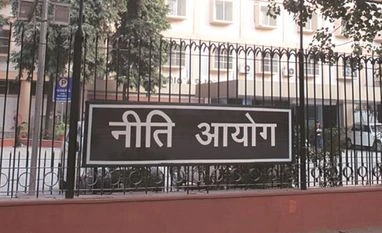 "Tamil Nadu, 6 others lead in NITI Aayog's list of poverty reduction")











