'Tax harmonisation is important if India wants more foreign equity'
JBIC President says India will not be able to invite foreign investment without loosening tighter tax control measures
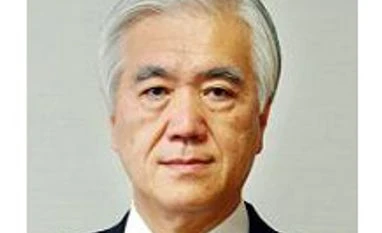
Nayanima Basu Greater Noida For India to achieve higher rate of growth it is important the government develops infrastructure, said Hiroshi Watanabe, president and chief executive of Japan Bank for International Cooperation (JBIC). In an interview with Nayanima Basu on the sidelines of the ADB annual meeting, Watanabe said without loosening tighter tax control measures India will not be able to invite foreign investment and thereby growth. Excerpts:
It seems Japan has finally started looking at India seriously from investment point of view. What will you have to say?
Well as you know the Japanese government has shown a very good interest to India. As per the government's survey, India now ranks at number two in terms of where Japanese investors are interested to come in. The number one is China. This is a very good indication. Now the government is committed to promote industrial corridors in India. Japanese companies are looking at Southeastern part of the country to develop another corridor. Japanese investors, traditionally, had been using countries such as in US and Europe as their manufacturing base but in the case of Indian continent they are looking at producing here for those to be consumed here. India is that way a very big consumption market. JBIC is very much interested in supporting their activities.
JBIC has started expanding its area of operation in India, from steel to electricity, you seem to be financing and supporting a large number of sectors. Why?
Our outstanding lending to India stands at $1.6 billion which is rising and so far we are lending it to the creation of manufacturing capacity here. We are lending to steel and electricity sectors and also to automobiles. We have also made considerable lending to the infrastructure sector such as the Delhi Mumbai Industrial Corridor and . In power generation NTPC is our largest client.
So, your core area of operation remains infrastructure development?
I think the present government understands the importance of infrastructure development. Earlier governments did not realise its importance when we said Japanese governments are facing difficulties here compared to China due to infrastructure. The government is now committed to invest in infrastructure. At the current level of infrastructure you can have a growth rate of maximum 6-7 per cent. In order to achieve 9 per cent growth rate the level of infrastructure has to be much better. In the last two years India could not grow at 9 per cent but that has to do with the global environment also. But India's potential is very high which Japanese companies have realised.
But the DMIC has failed to take off compared to what it was supposed when it was launched with huge fanfare around 6 years back?
Yes it has indeed taken some time for the project to come up. Well, it is not easy for a project of that size to come up soon. And as I said, we need some coordination on acquiring land which have some problem because of the involvement of the state governments. We are now planning to bring in some new design. Moreover, in last two years the pace had gone slower because of the global economic environment which slowed down India as well. Now all we need is more coordination. We are now looking to develop another corridor between Chennai and Bangalore. They will come up one by one.
Recently, the Japanese investors have shown some grave concerns over India. During his recent visit to Tokyo, finance minister P. Chidambaram had to face some tough questions from the investors. What are their main concerns?
The main problem is the tighter regulation you follow for foreign capitals to come to India. In many areas, majority shareholding cannot be taken. The transaction to real estate is somewhat limited. Also, at the banking sector some of the regulations, especially with reference to currency operation. We have been in discussion with the RBI for last few years on this. We have also been in discussion with some of these things with ministry of finance and ministry of commerce and industry. There has to be some flexibility if you want foreign capital to come.
I understand the Japanese investors have issues with some of recently announced tax proposals with relation to GAAR and retrospective amendments. Now that government has put the issue to rest, albeit temporarily, has that soothe their nerves?
Every country has some concern regarding their taxation system. But at the same time there has to be some fiscal soundness. I am sure your finance minister will have better control over tax management and enforcement and will also make some harmonisation to make it easier for foreign capitals to come in with the creation of a better environment.

 "'Tax harmonisation is important if India wants more foreign equity'")

